Hammers and Headaches: What Parkview's Construction Seasons Are Quietly Doing to Your Property's Market Position
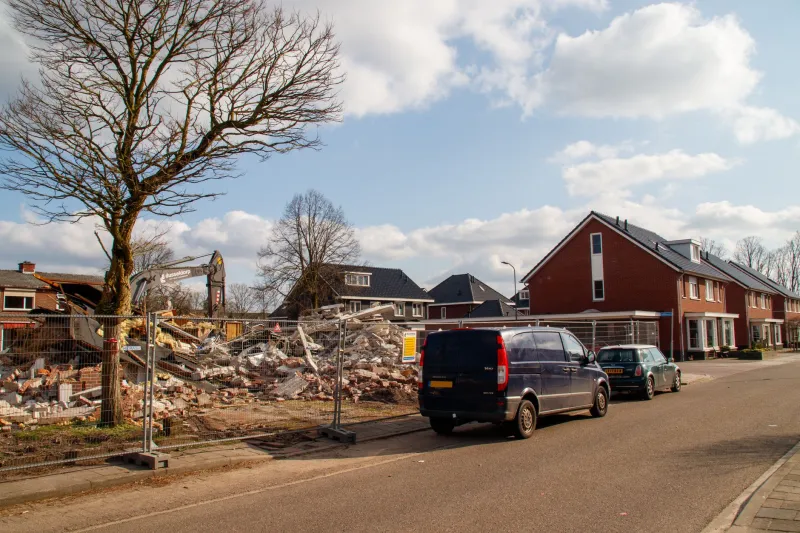
Parkview has long attracted buyers who value a neighborhood in motion—one where renovation, infill development, and infrastructure investment signal a community with upward momentum. Yet that same activity carries a cost that rarely appears in listing descriptions or market summaries: the measurable, cyclical disruption that construction seasons impose on buyer perception, negotiating leverage, and ultimately, sale prices.
Understanding how Parkview's construction calendar intersects with its real estate market is not a minor consideration. For sellers, it can determine whether a property commands a premium or sits. For buyers, it can reveal negotiating windows that would otherwise remain invisible.
The Seasonal Pattern Most Residents Already Know—But Few Act On
In Parkview, as in most mid-Atlantic and Midwest-adjacent markets, construction activity follows a well-established arc. Activity begins climbing in earnest through March and April, reaches its most intense concentration between late May and August, and tapers off sharply by October as contractors race to complete weather-sensitive work before the first hard frost.
During those peak months—particularly June through August—the cumulative effect of multiple simultaneous projects can be substantial. Noise complaints filed with local municipal offices in Parkview's residential corridors consistently spike during this window, with some blocks reporting complaint volumes three to four times higher than their off-season baseline. Street closures, equipment staging, and delivery truck traffic further compound the disruption.
What this means in practice is that buyers touring homes in July are receiving a fundamentally different sensory and logistical experience than those touring the same properties in November. That difference registers—consciously or not—in how they evaluate and ultimately price their offers.
How Buyer Psychology Responds to Construction Noise
Research into buyer behavior consistently demonstrates that ambient conditions during property tours have an outsized effect on perceived value. A home shown against a backdrop of jackhammers and backup alarms is unlikely to generate the same emotional engagement as one shown in quiet conditions, regardless of the property's intrinsic merits.
In Parkview's market, this dynamic plays out in several specific ways. First, buyers who tour during peak construction periods tend to ask more questions about ongoing and planned development nearby—questions that can introduce doubt even when the projects in question are temporary or beneficial. Second, inspection contingency periods that overlap with heavy construction windows sometimes surface concerns—about vibration, dust infiltration, or structural settling—that might not arise under calmer conditions. Third, and perhaps most significantly, buyers who feel uncertain about a neighborhood's noise environment are more likely to submit below-asking offers or request concessions as a hedge against an unknown they cannot fully evaluate.
The result is a soft but real downward pressure on negotiated sale prices for properties in active construction zones during peak season.
The Months That Demand Attention
For sellers in Parkview, three specific windows carry particular strategic weight.
Late April to mid-May represents a transitional period when construction is ramping up but has not yet reached its most disruptive intensity. Buyer traffic is typically strong during this window, and the neighborhood's energy can read as vitality rather than chaos. Sellers who list in this window often benefit from motivated spring buyers while avoiding the worst of summer disruption.
Mid-June through August is the period of highest risk for sellers adjacent to active projects. Listings that enter the market during this window without a clear disclosure and communication strategy often experience longer days-on-market and more aggressive buyer negotiating. Sellers who cannot avoid this window should consider proactively providing context about construction timelines—buyers who understand that a project will conclude in eight weeks are far less likely to discount their offers than those left to speculate.
September through early November is, in many respects, Parkview's most underappreciated selling window for properties near construction activity. Projects are winding down, noise levels are declining, and buyers who missed the spring market are often more motivated and less cautious. Sellers who have been waiting out a difficult summer can frequently recover lost ground by listing in this period.
What Buyers Can Extract from the Construction Calendar
For buyers, the construction season creates negotiating opportunities that are rarely discussed openly. Properties that have sat on the market through a noisy summer—particularly those with price reductions that coincide with peak construction months—may be positioned more favorably than their history suggests.
A home that failed to sell in July near an active development site is not necessarily a flawed property. It may simply be a property that was shown under unfavorable conditions to buyers who were understandably cautious. Approaching such a listing in October, with construction noise abated and a seller who has grown frustrated with extended market exposure, can yield a meaningfully different negotiating dynamic.
Buyers should also pay close attention to Parkview's development pipeline data—publicly available through municipal permitting records—when evaluating properties. A home purchased adjacent to a vacant lot carries construction risk that may not materialize for years, but understanding the permitting status of surrounding parcels allows buyers to assess that risk with greater precision.
The Disclosure Gap That Both Sides Should Address
One of the more consequential issues in Parkview's construction-adjacent transactions is the inconsistency with which sellers and their representatives disclose the nature and duration of nearby building activity. Sellers are understandably reluctant to volunteer information that might complicate their sale, while buyers often lack the local knowledge to ask the right questions.
This gap creates risk on both sides. Sellers who fail to disclose known construction timelines may face post-closing disputes or reputational consequences in a community where word travels quickly. Buyers who do not conduct their own due diligence may inherit conditions they did not anticipate.
The most straightforward approach—proactive, factual disclosure paired with context about project completion timelines and anticipated outcomes—tends to produce the best results for all parties. Buyers who understand what they are purchasing are more likely to close, and sellers who demonstrate transparency often find that buyers respond with greater confidence rather than increased skepticism.
Timing Is a Strategy, Not an Afterthought
Parkview's construction activity is, in most respects, a sign of a healthy and desirable community. Development pressure reflects demand, and demand reflects value. The challenge is not the activity itself but the failure of many market participants to account for its cyclical effects when making timing decisions.
Sellers who treat their listing date as a strategic variable—rather than a matter of personal convenience—consistently outperform those who do not. Buyers who understand the seasonal dynamics of their target neighborhoods are better positioned to identify value and negotiate effectively.
In a market as competitive and nuanced as Parkview's, the construction calendar is a tool. Those who learn to read it will consistently find themselves on the stronger side of the transaction.