Everything Right, Nothing Moving: The Hidden Forces Stalling Parkview's Most Qualified Listings
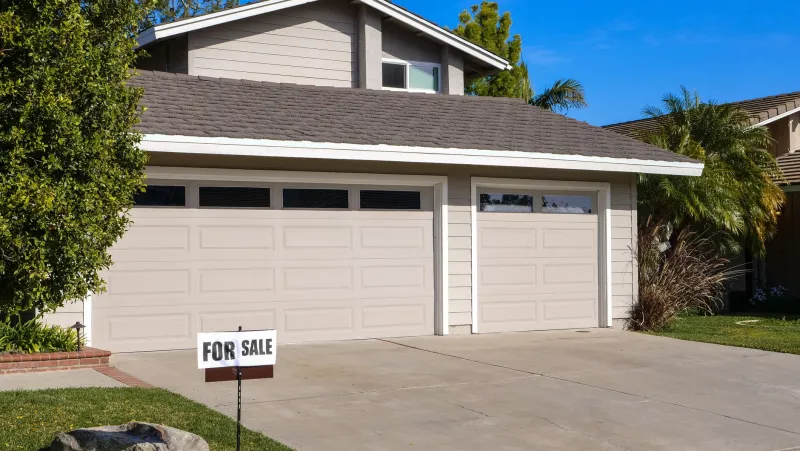
There is a particular frustration reserved for the Parkview seller who has done everything correctly. The home is updated, priced within reason, located on a desirable street, and free of the structural liabilities that typically scare off cautious buyers. The listing goes live on a Thursday, the weekend showings come and go, and then—silence. Days accumulate. The sign stays planted. The seller, understandably, begins to question everything.
This is not an uncommon scenario in Parkview. Across several of the community's most established corridors, a quiet paradox has taken hold: properties that meet virtually every objective criterion for a quick sale are instead becoming cautionary tales, while homes with visible limitations move briskly. Unpacking this phenomenon requires moving past surface-level explanations and examining the more nuanced forces that shape buyer behavior in a competitive, information-saturated market.
When Good Enough Becomes Invisible
One of the more counterintuitive dynamics at play in Parkview's current market is the problem of undifferentiated quality. As the neighborhood has matured and renovation activity has intensified, a growing number of homes now occupy the same general tier of condition and finish. Granite countertops, refinished hardwoods, updated bathrooms—these features were once reliable differentiators. Today, they are baseline expectations across much of Parkview's mid-range inventory.
When multiple listings in the same micro-neighborhood share nearly identical attributes and price points, buyers face what behavioral economists call choice paralysis. Rather than selecting the best available option from a small set, they find themselves unable to distinguish meaningfully between several adequate options. The result, paradoxically, is inaction. Buyers who cannot identify a clear winner often defer their decision entirely, waiting for a listing that feels unmistakably right—even if the properties they passed over were objectively sound choices.
Sellers in this position are not competing against inferior homes. They are competing against homes that are nearly identical to their own, and in that contest, the tie frequently goes to whichever property presents a more emotionally legible narrative.
The Photography Problem Nobody Wants to Admit
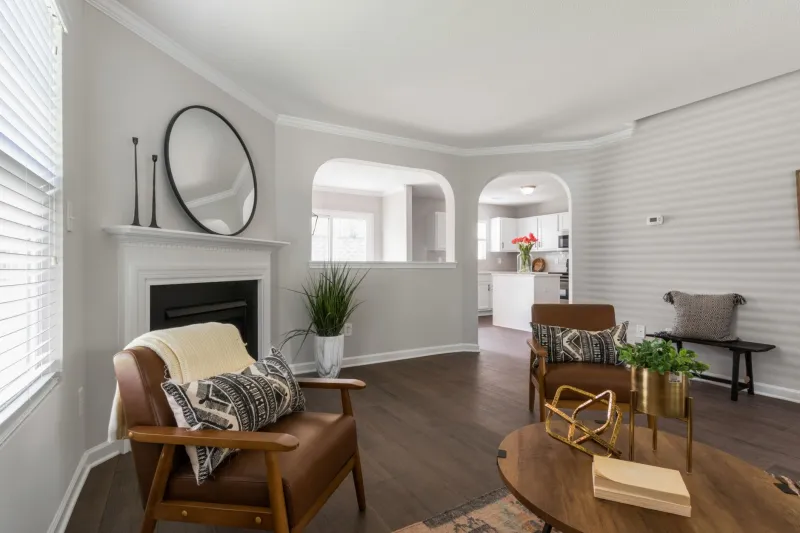
Among the practical factors most consistently linked to prolonged market time in Parkview, listing photography ranks near the top—and remains one of the most stubbornly underaddressed. It is tempting to assume that a genuinely attractive home will communicate its appeal through any set of images. In practice, the opposite is often true: a beautiful home photographed poorly can generate less buyer interest than a mediocre home photographed skillfully.
Consider a property that came to market in one of Parkview's more sought-after interior blocks earlier this year. The home featured original architectural details, a thoughtfully landscaped rear yard, and a renovated kitchen that would photograph exceptionally well under the right conditions. The listing images, however, were taken on an overcast afternoon with no supplemental lighting, rendering the interior dim and the kitchen's finishes muddy. Inquiries were sparse for the first three weeks. When the sellers relented and commissioned a professional photographer—including twilight exterior shots—showing requests increased markedly within days.
The lesson here is not merely aesthetic. In a market where buyers conduct the majority of their initial screening online, listing images function as the first showing. Homes that fail this test rarely recover their momentum, regardless of how well they perform in person.
Pricing Psychology and the Perception of Stagnation
Pricing a home correctly in Parkview is more complex than identifying fair market value. It also requires accounting for how price signals are interpreted by buyers who have access to days-on-market data and listing history. A home priced at $489,000 that sits for six weeks without an offer carries a different psychological weight than one priced at $510,000 that sells in twelve days. The lower-priced home, despite its apparent value, has been marked by the market as problematic—even if the underlying reason for its slow sale has nothing to do with the property itself.
This dynamic is particularly acute in Parkview's higher-density residential corridors, where buyers track listing histories closely and treat prolonged market time as a signal of undisclosed risk. The longer a home sits, the more buyers assume something is wrong that the listing does not reveal. Price reductions, even modest ones, tend to reinforce this perception rather than correct it, as they confirm that the original ask was misaligned with reality.
For sellers, the implication is straightforward but uncomfortable: entering the market at a price that generates immediate competition is almost always preferable to starting high and adjusting downward. In Parkview's current environment, the first two weeks on market are disproportionately influential in determining final sale terms.
Timing and the Seasonal Blind Spot
Parkview's market has well-documented seasonal rhythms, yet a surprising number of sellers continue to list without regard for timing. Properties that come to market in late November or during the post-holiday lull in January frequently encounter a buyer pool that is both smaller and more distracted than it would be in March or September. A home that might generate multiple offers in spring may sit quietly through winter—not because buyers are uninterested, but because fewer of them are actively searching.
This creates a category of listings that are effectively victims of circumstance rather than quality. For buyers who understand these patterns, such properties represent genuine opportunities. A home that has accumulated sixty days on market during a seasonally slow period may be available at a negotiated discount that has nothing to do with its actual condition or long-term value.
What Buyers Should Take From This
For buyers navigating Parkview's inventory, the existence of stalled listings among otherwise qualified properties is worth treating as a systematic opportunity rather than a red flag. Before dismissing a home that has been sitting, it is worth asking a specific set of questions: Did it come to market during a seasonally slow period? Were the original listing photos substandard? Has it been competitively priced relative to recent comparable sales, or did it enter high and adjust?
In many cases, the answers reveal not a flawed property, but a flawed presentation—and a seller who may now be more motivated than they were at launch. Buyers willing to look past presentation failures and market-timing accidents will frequently find themselves in a far stronger negotiating position than those competing for the home that generated offers in its first weekend.
For Sellers: The Audit Before the Adjustment
If your Parkview listing is accumulating days without meaningful activity, a price reduction is rarely the first tool to reach for. Before adjusting the number, conduct a thorough audit of every other variable: the quality and lighting of your listing photography, the timing of your original launch, the degree to which your home's strengths are legibly communicated in the listing description, and the density of competing inventory in your immediate micro-neighborhood.
In many cases, correcting a presentation failure or repositioning the narrative will do more to restore buyer interest than a five-thousand-dollar price cut. The Parkview market is discerning, but it is also responsive. Homes that have stalled for non-structural reasons can and do recover—provided sellers are willing to diagnose the actual problem rather than assume the market has simply passed them by.