When Fair Isn't Enough: The Counterintuitive Pricing Forces Driving Buyer Decisions in Parkview
There is a persistent belief among sellers entering the Parkview market that pricing a home correctly — not too high, not too low, precisely at or near appraised value — is the surest path to a swift and successful sale. It is a reasonable assumption. It is also, increasingly, an incomplete one.
Across Parkview's neighborhoods, a disorienting pattern has emerged that confounds even experienced real estate professionals. Homes listed at meticulously researched, market-supported prices sit for weeks without serious offers. Meanwhile, properties carrying prices that appear aggressive — sometimes conspicuously above comparable sales — attract competitive interest within days and close above ask. The arithmetic, on its surface, makes no sense. But the forces driving it are neither random nor mysterious. They are deeply rooted in buyer psychology, market positioning, and the mechanics of perceived value.
The Problem with Being Reasonable
When a home is priced at fair market value, it occupies a peculiar middle ground in the buyer's mind. It signals competence but not urgency. There is no obvious deal to be seized, no fear of loss to accelerate a decision. Buyers feel comfortable taking their time — scheduling a second showing, waiting for another property to come to market, or simply sleeping on it for a week. That comfort, paradoxically, is the enemy of momentum.
In contrast, a home priced above comparables — particularly one that presents well and carries a compelling narrative — generates a different cognitive response. Buyers interpret the elevated price as a signal of confidence from the seller. They assume, often unconsciously, that others have already recognized the value and that hesitation carries risk. This perceived scarcity triggers urgency in a way that rational pricing simply does not.
This is not a flaw in buyer reasoning. It is a predictable response to incomplete information. In a market where buyers cannot easily verify every variable that contributes to a property's worth, price itself becomes a proxy for desirability.
What Overpriced Listings Are Actually Selling
It would be a mischaracterization to suggest that overpriced homes succeed on price alone. The Parkview listings that defy conventional valuation logic almost always share a set of secondary characteristics that do the real work of justifying — or at least rationalizing — the ask.
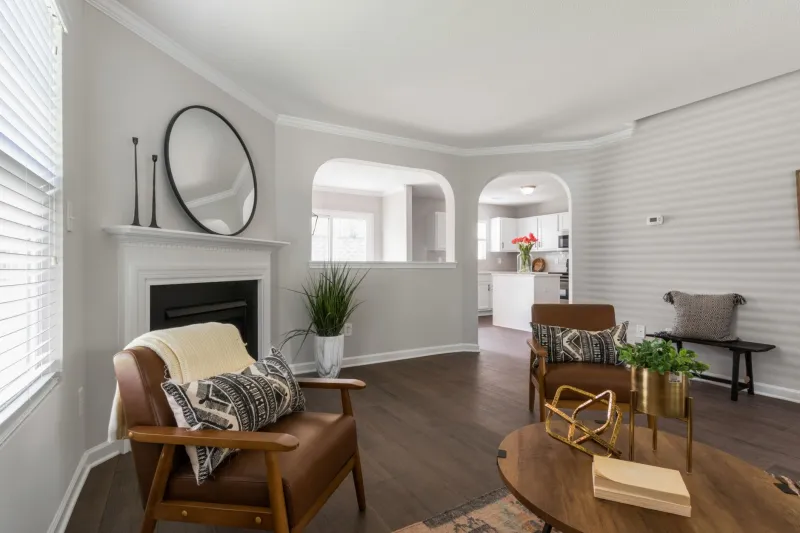
Presentation is the most consistent factor. Homes that are professionally staged, photographed with intention, and listed with a narrative that frames the property as aspirational tend to generate disproportionate interest regardless of their position relative to comps. The listing becomes an experience before it becomes a transaction, and buyers respond to that emotional engagement.
Location specificity matters as well. Even within Parkview's relatively contained geography, micro-location advantages — a particular street's canopy cover, proximity to a favored park entrance, a quieter block away from through traffic — can legitimately support a premium that the broader comp pool doesn't fully capture. Sellers who identify and communicate these distinctions effectively can defend prices that initially appear aggressive.
Finally, timing plays a role that is easy to underestimate. A home priced above market during a period of constrained inventory will encounter a buyer pool with fewer alternatives and greater willingness to stretch. The same home at the same price during a period of active new listings may sit untouched.
Why Accurate Pricing Can Generate Hesitation
The fairly priced home faces a structural disadvantage that has less to do with the property itself and more to do with how buyers process options. When a listing appears priced to reflect reality without any apparent upside, buyers begin to ask what they might be missing. The absence of a compelling premium can read, irrationally but genuinely, as an absence of distinction.
There is also the matter of negotiating psychology. Buyers who anticipate room to negotiate — even modestly — often feel more engaged with the process. A home priced precisely at value offers little of that dynamic. The transaction feels transactional rather than relational, and some buyers disengage before they have fully evaluated the property on its merits.
This does not mean that sellers should artificially inflate their asking prices in hopes of manufacturing urgency. Overpricing without the supporting presentation and narrative infrastructure tends to produce the worst outcome: extended days on market, price reductions, and the stigma that attaches to listings that have visibly stalled.
The Framework Parkview Sellers Need
Navigating this environment requires sellers to think beyond the question of what their home is worth and toward the question of what their listing communicates. Several considerations deserve deliberate attention before any price is set.
Understand your inventory context. Before establishing a price, sellers should assess how many competing listings currently exist within their immediate sub-neighborhood and price band. A fairly priced home in a crowded field is invisible. The same home in a thin market commands attention by default.
Audit your presentation independently. The quality of listing photography, the coherence of staging, and the strength of the listing description are not cosmetic concerns. They are pricing infrastructure. Homes that present at a level above their price point create the perception of value that sustains buyer interest.
Identify and articulate your micro-location advantages. Parkview buyers are increasingly sophisticated about neighborhood granularity. Sellers who can speak specifically to what distinguishes their block, their orientation, their proximity to amenities — rather than relying on buyers to discover these qualities independently — are better positioned to defend a price.
Consider the role of the first week. Days on market carries significant psychological weight in Parkview's buyer community. A listing that enters the market generating immediate showing activity — regardless of whether those showings convert quickly — creates a perception of demand that sustains momentum. Pricing and presentation decisions made before launch have an outsized influence on that initial window.
Rethinking the Relationship Between Price and Value
The Parkview market is not irrational, but it is not purely logical either. Buyers are navigating a complex set of signals simultaneously — price, presentation, timing, inventory, and narrative — and they are doing so under conditions of genuine uncertainty. In that environment, the home that tells the most compelling story has an advantage that transcends the precision of its asking price.
For sellers, the lesson is not that accuracy is a liability. It is that accuracy alone is insufficient. The homes that move quickly in Parkview's current market are the ones that pair competitive pricing with a presentation and positioning strategy that gives buyers a reason to act now rather than wait. That combination — not price alone — is what closes deals.
Understanding this dynamic does not guarantee a fast sale. But it does equip sellers with a more complete picture of what they are actually competing against when their listing enters the market.