More Than a Driveway: Why Parking Conditions Are Quietly Deciding Deals Across Parkview's Neighborhoods
Photo: Internet Archive Book Images, No restrictions, via Wikimedia Commons
Buyers walking through a prospective home in Parkview typically spend their time evaluating kitchen finishes, ceiling heights, and backyard dimensions. Parking, if it enters the conversation at all, tends to arrive as an afterthought—a box to check rather than a factor to analyze. That oversight, according to experienced agents in the market, is one of the more common mistakes a buyer can make.
Parking conditions vary considerably across Parkview's neighborhoods, shaped by the era in which each area was developed, the lot configurations that resulted, and the street design standards that were applied. Those variations carry real consequences for daily life and, ultimately, for resale performance.
Why Parking Rarely Gets the Attention It Deserves
The undervaluation of parking as a buying criterion follows a predictable pattern. Buyers tend to evaluate a property during a single scheduled showing, often on a weekday afternoon when street parking is abundant and garage access is unobstructed. The experience of hunting for a spot on a Friday evening, navigating a narrow shared driveway, or maneuvering a full-size pickup into a garage designed for compact sedans is not part of the showing experience.
The gap between the showing experience and the living experience is where parking problems hide. Agents who have worked extensively in Parkview consistently report that parking-related complaints rank among the most common grievances raised by buyers in the months following a purchase. The frustration is predictable; the failure to anticipate it is avoidable.
How Parkview's Neighborhoods Differ
Parkview encompasses residential areas developed across multiple decades, and those development eras produced meaningfully different parking conditions.
Older, established neighborhoods—particularly those platted before the widespread adoption of the two-car household—frequently feature narrower lot widths, single-car garages, and limited off-street parking capacity. Street parking in these areas can be competitive, particularly on blocks with higher residential density or proximity to neighborhood commercial activity. Properties in these zones may carry charm and architectural character, but buyers with multiple vehicles or regular guests should evaluate parking realistically before committing.
Neighborhoods developed from the 1970s through the 1990s generally reflect the parking assumptions of that era: two-car attached garages, wider driveway aprons, and street configurations that accommodate on-street parking more generously. These properties tend to offer the most straightforward parking experience and, not coincidentally, attract buyers who prioritize function alongside aesthetics.
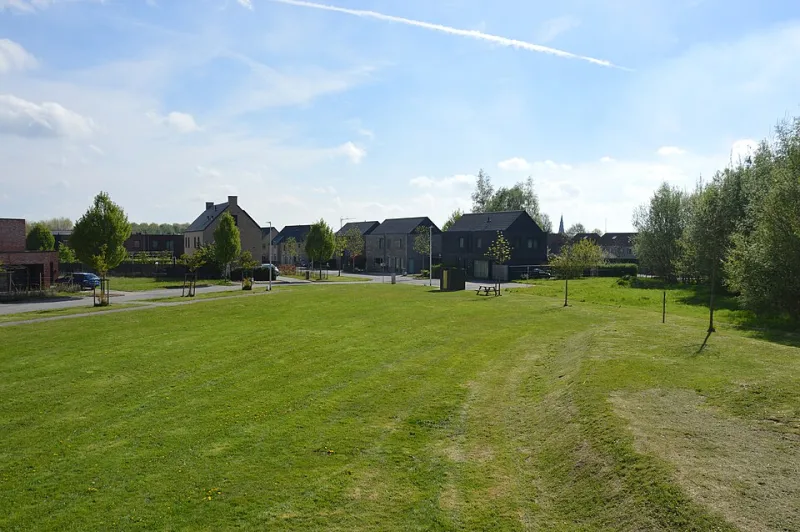
Newer planned developments within Parkview present a more varied picture. Some master-planned communities have incorporated generous garage allotments and designated guest parking areas as deliberate amenities. Others, developed with density and walkability as organizing principles, have intentionally reduced parking provisions—an approach that suits some buyers and creates friction for others.
Garage Size: The Specification That Buyers Underestimate
A two-car garage designation on a listing sheet is not a uniform specification. The actual interior dimensions of garages across Parkview's housing stock vary enough to matter in practical terms.
A garage listed as accommodating two vehicles may do so comfortably, tightly, or theoretically—depending on the year of construction and the builder's standards at the time. Agents familiar with specific Parkview subdivisions can often identify which developments built garages to generous dimensions and which delivered the minimum required by code. Buyers with larger vehicles, recreational equipment, or workshop aspirations should measure before assuming.
Driveway depth is a related consideration. A garage with a short apron limits the ability to park additional vehicles outside without encroaching on the sidewalk or street—a situation that can trigger municipal parking ordinances in certain Parkview neighborhoods. Understanding the full off-street parking capacity of a property, not just the garage designation, provides a more accurate picture of its practical utility.
Street Parking Policies and Their Impact on Livability
Parkview's municipal parking regulations are not uniform across the community. Certain streets carry overnight parking restrictions. Others fall within permit zones that limit non-resident parking. Some blocks adjacent to parks, schools, or commercial corridors experience predictable periods of high parking demand that residents must navigate on a recurring basis.
These conditions are discoverable before purchase, but they require deliberate inquiry. A conversation with the local planning or public works department, a review of posted signage during an evening visit to the neighborhood, and a direct question to the listing agent about known parking constraints are reasonable steps for any serious buyer.
For buyers considering properties with limited off-street parking, the surrounding street environment becomes part of the property's effective parking capacity. A home with a single-car garage on a block with ample, unrestricted street parking may function adequately for a two-vehicle household. The same property on a block with permit restrictions or heavy competition for curb space presents a different daily reality.
Resale Value and the Parking Premium
The market consequences of parking conditions show up most clearly at the moment of resale. Properties with superior parking configurations—oversized garages, wide driveways, easy access, and ample street parking nearby—tend to generate broader buyer pools. A listing that solves parking comprehensively removes an objection before it is raised.
Conversely, properties with identified parking deficiencies often require price adjustments to compensate. Buyers who recognize the limitation will factor remediation costs or ongoing inconvenience into their offer calculations. In a market where buyer pools are competitive, a parking liability can narrow the field of interested parties and extend time on market.
Agents in Parkview have observed that parking concerns, when raised during negotiations, can shift leverage meaningfully. A buyer who identifies a genuine parking constraint has a defensible basis for a reduced offer—one that is difficult for a seller to dismiss without addressing the underlying condition.
What Buyers Should Do Before Making an Offer
The practical guidance here is straightforward. Visit the property at multiple times of day, including an evening hour when residents are home and street parking demand is at its peak. Bring a tape measure and assess the garage interior dimensions against the actual vehicles you own or plan to own. Confirm whether the driveway apron is deep enough to accommodate additional parking without violating local ordinances.
Ask the listing agent directly about any known parking-related issues—neighbor disputes over shared driveways, seasonal permit requirements, or planned street modifications by the municipality. These questions are reasonable, and the answers are informative.
Parking is rarely the reason a buyer falls in love with a Parkview property. But it is frequently the reason they fall out of love with one after move-in. Addressing it with appropriate seriousness during the evaluation process is one of the more practical steps a buyer can take toward a purchase they will not regret.