Plugged In and Productive: How Parkview's Neighborhoods Stack Up for Remote and Hybrid Workers

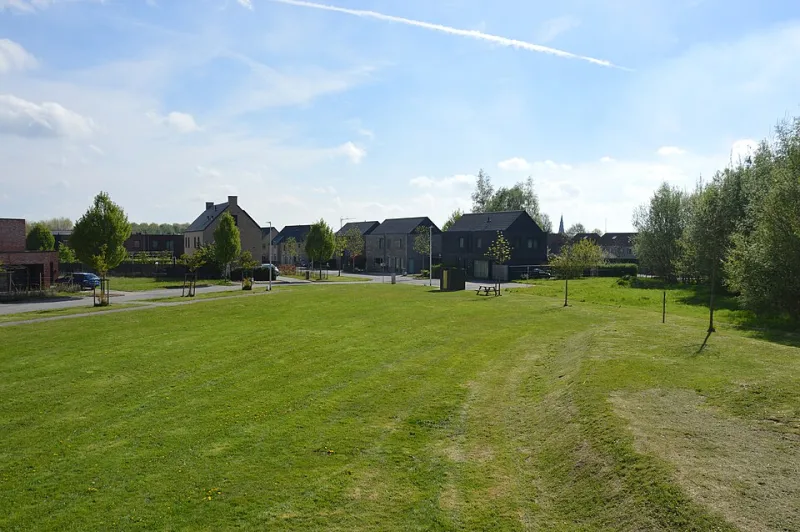
Photo: Wilfredor, CC0, via Wikimedia Commons
The nine-to-five commute is no longer the defining rhythm of American professional life. For a growing share of workers—whether fully remote or navigating a hybrid schedule—the home itself has become the office, the conference room, and occasionally, the break room. That shift has fundamentally changed what buyers prioritize when evaluating a neighborhood. Proximity to a highway on-ramp matters far less than proximity to a reliable internet node, a quiet street, or a well-appointed coffee shop with ample seating.
Parkview, with its varied residential fabric and steadily evolving infrastructure, has positioned itself as a serious contender for this new class of location-flexible professional. But not every corner of the community offers the same experience. Understanding which neighborhoods align with specific work-from-home needs is essential for buyers who intend to make their next home purchase a long-term productivity investment.
Connectivity First: Understanding Parkview's Internet Infrastructure
Before weighing the merits of any individual neighborhood, remote workers should understand the broadband landscape across Parkview as a whole. High-speed fiber-optic service has expanded significantly in recent years, with coverage now extending through the majority of established residential zones. However, coverage density and provider options vary meaningfully by area.
The central and northern sections of Parkview tend to benefit from more competitive provider options, which generally translates to better pricing and more reliable service agreements. Buyers in these zones frequently report symmetrical upload and download speeds—a critical factor for professionals who participate in frequent video conferences or transfer large files regularly. Southern and outer-boundary neighborhoods, while often more affordably priced, may still rely on cable-based infrastructure in certain blocks, which can introduce latency during peak usage hours.
For any buyer whose livelihood depends on a stable connection, verifying service availability at the specific property address—not just the general neighborhood—is a non-negotiable step in the due diligence process.
The Café Circuit: Neighborhoods Built for Flexible Workdays
Not every remote worker thrives in a home office environment. Many professionals prefer to rotate between home, local coffee shops, and shared workspaces to maintain focus and avoid isolation. For this cohort, Parkview's walkable commercial corridors are among the community's most underappreciated assets.
The neighborhoods adjacent to Parkview's main retail and dining thoroughfares offer the densest concentration of café options, with several establishments that have clearly adapted their layouts to accommodate the laptop-and-headphones crowd. Extended hours, strong Wi-Fi signals, and ample seating configurations make these locations practical daytime work venues rather than mere coffee stops.
Residents in these walkable zones frequently cite the ability to conduct a full workday without entering a car as a meaningful quality-of-life improvement. The reduced friction of a five-minute walk to a change of scenery—rather than a twenty-minute drive—adds up considerably over the course of a month.
Co-Working Infrastructure: A Growing Amenity in Parkview
Dedicated co-working spaces represent the next tier of professional infrastructure, and Parkview has seen measured but notable growth in this category. Shared workspace facilities have established footholds in the community's more commercially active zones, offering month-to-month memberships, private day offices, and meeting room rentals that serve professionals who need occasional access to a formal business environment without committing to a traditional lease.
For hybrid workers—those who report to a corporate office two or three days per week—a nearby co-working space can serve as a productive alternative to the home office on non-commute days. It also provides a professional backdrop for client-facing video calls when a residential setting feels insufficiently formal.
Buyers evaluating properties near these facilities should consider the commute time to a co-working location as a meaningful neighborhood criterion, much as a prior generation of buyers evaluated distance to a train station.
Quiet Residential Zones: Where Deep Work Gets Done
For professionals who require long, uninterrupted blocks of concentration—writers, software developers, financial analysts, and others whose output depends on sustained focus—neighborhood ambient noise levels matter enormously. Parkview's quieter, tree-lined residential streets, particularly those set back from major arterials, offer an environment that can be genuinely difficult to replicate in denser urban settings.
The interior residential blocks of Parkview's more established neighborhoods are characterized by reduced through-traffic, mature canopy coverage, and a general sense of unhurried calm that many remote workers find conducive to deep work. These areas tend to attract buyers with families as well, which means well-maintained properties and stable community investment are common attributes.
It is worth noting that quieter neighborhoods sometimes sacrifice walkability to commercial amenities. Buyers must weigh the trade-off between a serene home-office environment and convenient access to the café circuit described above. In many cases, the answer lies in identifying properties that sit at the edge of a quiet residential zone while remaining within a reasonable distance of commercial corridors.
Making the Right Match: Aligning Your Work Style to a Neighborhood
The most productive remote workers tend to be those who have deliberately designed their environment to support their professional habits. Parkview's diversity of neighborhood types makes it possible to find a genuine match—but only if buyers approach the search with their work-from-home requirements as clearly defined criteria rather than afterthoughts.
A useful framework is to identify the two or three non-negotiable infrastructure elements your professional life requires—whether that is fiber-optic connectivity, walking distance to a café, access to a co-working facility, or a quiet street—and use those as primary filters before considering secondary factors like square footage or aesthetic preferences.
Real estate professionals familiar with Parkview's neighborhood-by-neighborhood characteristics can provide meaningful guidance in this process. The right address in Parkview is not simply a place to sleep—for an increasing number of residents, it is the foundation of their professional life as well.