Location, Time, and Trade-Offs: A Neighborhood-by-Neighborhood Commute Guide for Parkview Buyers

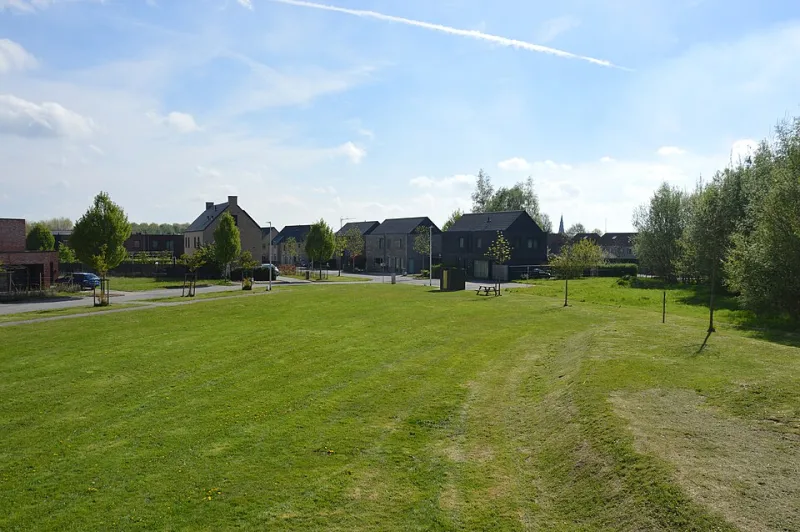
Photo: Shane Rounce shanerounce, CC0, via Wikimedia Commons
For most homebuyers, the conversation begins with square footage, school ratings, and price per square foot. Commute time, however, is the variable that quietly shapes daily quality of life more than almost any other factor. In Parkview, where neighborhood character shifts dramatically from one corridor to the next, understanding how each address performs against your workplace — and your lifestyle — is essential intelligence before signing any purchase agreement.
This guide examines commute realities across Parkview's primary residential zones, accounting for drive times, public transit reliability, and the growing influence of hybrid work schedules on how buyers should weigh proximity to employment centers.
Why Commute Math Matters More Than You Think
A 2023 study by the National Association of Realtors found that 82 percent of buyers identified commute time as a "very important" or "important" factor in their home search — yet many still underestimate the cumulative cost of a long commute. Consider this: a 30-minute one-way commute translates to approximately 250 hours per year in transit for a five-day-per-week worker. At that scale, the difference between a 15-minute and a 40-minute commute is not merely inconvenient — it represents over 200 hours of reclaimed or forfeited personal time annually.
In Parkview, that arithmetic is especially relevant. The community's residential footprint spans neighborhoods with meaningfully different access profiles, and buyers who treat all Parkview addresses as equivalent are often surprised by what daily travel actually looks like post-move.
The Inner Neighborhoods: Convenience at a Premium
Parkview's inner neighborhoods — those situated closest to the community's commercial core and primary arterial roads — consistently deliver the shortest commute windows. Residents in these zones typically reach downtown employment hubs in 10 to 18 minutes by car under normal traffic conditions, and many can access express bus lines within a short walk of their front door.
The trade-off is familiar: higher median home prices and, in some pockets, smaller lot sizes. For buyers who commute five days per week to a centrally located employer, however, the premium frequently justifies itself. When you factor in reduced fuel costs, lower vehicle wear, and the psychological toll of extended daily transit, inner-neighborhood properties often deliver more total value than their list prices initially suggest.
Public transit access in these areas is notably stronger. Several inner Parkview streets fall within the service radius of high-frequency bus routes, and connectivity to regional rail stations — for buyers whose employers are located in adjacent metropolitan centers — is considerably more practical here than in outlying zones.
The Mid-Ring Neighborhoods: The Balance Point
Parkview's mid-ring neighborhoods represent the most nuanced commute calculation. Situated between the community's commercial core and its outer residential edges, these areas offer a middle path that appeals to a broad range of buyer profiles.
Drive times to major employment centers from mid-ring addresses typically range from 20 to 35 minutes, though this figure is sensitive to departure time. Morning peak hours can extend that window by 10 to 15 minutes on certain corridors, particularly those intersecting with regional thoroughfares. Buyers considering mid-ring properties should test their specific commute route during actual peak hours — not on a Saturday afternoon — before finalizing a decision.
Transit options in these neighborhoods are present but less frequent than in inner zones. Service intervals on connecting bus routes can run 20 to 30 minutes during off-peak hours, which makes transit a viable but less spontaneous option for mid-ring residents. That said, park-and-ride facilities near several mid-ring access points have improved regional rail utility for buyers willing to incorporate a short drive into their transit routine.
For buyers who work hybrid schedules — commuting two or three days per week rather than five — mid-ring neighborhoods often represent the optimal balance between price, space, and acceptable travel time.
The Outer Neighborhoods: Space, Quiet, and the Commute Cost
Parkview's outer residential neighborhoods attract buyers seeking larger parcels, quieter streets, and a more distinctly suburban character. The commute calculus here demands honest evaluation.
Drive times to major employment hubs from outer Parkview addresses can range from 35 to 55 minutes under typical conditions, with peak-hour variability adding further uncertainty. For five-day commuters, this translates to a meaningful daily time investment. Transit access in outer neighborhoods is limited, with lower service frequency and fewer route options; most residents in these zones rely primarily on personal vehicles.
The outer neighborhoods are, however, where the remote work revolution has had its most significant impact on buyer behavior. As hybrid and fully remote arrangements have become normalized across many professional sectors, a growing segment of buyers is deliberately choosing outer Parkview precisely because commute frequency has declined. For a buyer who travels to an office one or two days per week, a 45-minute drive becomes a manageable periodic inconvenience rather than a daily burden — and the additional living space and lower price points become correspondingly more attractive.
How Remote Work Has Redrawn the Commute Map
The post-pandemic normalization of flexible work arrangements has materially changed how Parkview buyers should think about commute analysis. Rather than calculating a single daily round-trip, today's buyers increasingly need to model their specific work schedule against their prospective neighborhood's transit profile.
A fully remote worker has, in practical terms, decoupled home location from commute entirely — making neighborhood amenities, school quality, and lifestyle fit the dominant selection criteria. A hybrid worker commuting three days per week faces a different optimization than a traditional five-day commuter, and the neighborhoods that make sense for each profile differ accordingly.
The Parkview market has reflected this shift. Outer neighborhoods that historically traded at steeper discounts relative to inner zones have seen that gap narrow as remote-capable buyers have expanded their geographic consideration set. Buyers should be cautious, however, about purchasing a home whose value proposition depends heavily on a work arrangement that may not be permanent — employer policies on remote work have demonstrated considerable variability over recent years.
Practical Steps Before You Commit
Before placing an offer on any Parkview property, consider the following commute-specific due diligence steps:
- Test the route at peak hours. Drive or transit your actual commute path during a Tuesday or Wednesday morning between 7:30 and 9:00 a.m. Weekend or midday test drives significantly underestimate real-world conditions.
- Use multiple mapping tools. Google Maps, Apple Maps, and Waze each apply different traffic modeling algorithms. Comparing all three provides a more reliable range of expected travel times.
- Account for the full door-to-door time. Parking, walking to an office entrance, and transit transfers add meaningful minutes that point-to-point mapping tools often undercount.
- Consider your employer's trajectory. If your company is considering an office relocation or a shift in remote work policy, factor that uncertainty into your neighborhood selection.
Location in Parkview is never purely about what you pay at closing. It is also about what you spend — in time, in fuel, and in daily energy — every morning and evening thereafter. A clear-eyed commute analysis is among the most valuable investments a prospective buyer can make before committing to an address.