Growth on the Horizon: What Parkview's Development Pipeline Means for Buyers and Investors Right Now
Photo: Kerry Raymond, CC BY 4.0, via Wikimedia Commons
Communities rarely change gradually. More often, they shift in cycles — long periods of relative stability punctuated by concentrated bursts of investment, construction, and demographic evolution. Parkview, by most meaningful indicators, is currently in the midst of one such cycle. The question for anyone considering a real estate decision in this community is not whether change is occurring, but rather what form it is taking, where it is concentrated, and how strategically positioned buyers can capitalize on the moment.
This analysis examines the current development landscape in Parkview with the specificity that serious buyers and investors deserve. The goal is not to generate enthusiasm for its own sake, but to provide a grounded, data-informed perspective on how the community's growth trajectory is likely to affect property values, neighborhood character, and investment returns over the near and medium term.
The Current Development Landscape: What Is Actually Being Built
Parkview's active construction pipeline encompasses several distinct categories of development, each carrying different implications for the community's residential market.
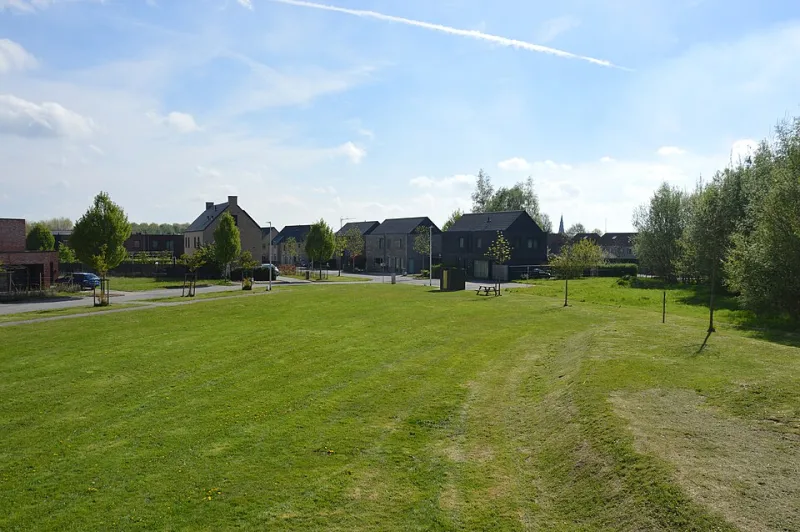
On the residential side, new single-family construction is concentrated primarily in the community's underdeveloped northern parcels, where larger lot sizes and favorable zoning designations have attracted builder interest. Several projects in various stages of permitting and active construction will introduce a meaningful volume of new inventory to the market over the next eighteen to thirty-six months. These developments range from entry-level product targeting first-time buyers to higher-specification builds aimed at move-up purchasers relocating from adjacent markets.
Of equal significance is the moderate-density residential development occurring along several of Parkview's commercial transition zones — areas where single-family neighborhoods historically gave way to strip retail and light commercial uses. Infill townhome and condominium projects are filling these transitional corridors, introducing a housing typology that Parkview has historically lacked. For buyers who want proximity to walkable amenities without the maintenance demands of a detached home, these projects represent a genuinely new option within the community.
Commercial development, while more modest in scale, is equally consequential. Several mixed-use projects incorporating ground-floor retail beneath residential units are under review or in early construction phases along Parkview's primary commercial corridors. The long-term effect of these projects — bringing food and beverage, service retail, and neighborhood-serving commercial uses into better-integrated proximity to housing — is to strengthen the community's walkability profile and expand the range of daily needs residents can meet without driving.
Infrastructure Investment: The Foundation of Sustainable Growth
Development without corresponding infrastructure investment tends to generate as many problems as it resolves. Parkview's current growth cycle is notable, in part, because it is occurring alongside meaningful public investment in the community's physical foundations.
Road improvements and traffic management upgrades are underway along several of the corridors most affected by increased construction activity. Utility infrastructure — water, sewer, and stormwater systems — is being expanded and upgraded in coordination with new development approvals, a pattern that reflects deliberate municipal planning rather than reactive crisis management.
Perhaps most significantly from a long-term value perspective, Parkview has secured funding commitments for expanded pedestrian and bicycle infrastructure connecting key residential areas to commercial nodes, green spaces, and public transit access points. This type of connectivity investment has a well-documented track record of supporting sustained property value appreciation in communities across the United States, as it broadens the pool of buyers who can realistically envision a car-light lifestyle within the neighborhood.
For investors evaluating Parkview against competing markets, the presence of coordinated public infrastructure investment alongside private development activity is a meaningful positive signal. It suggests that growth is being managed with some degree of intentionality — a condition that reduces the risk of the infrastructure deficits and quality-of-life degradation that can accompany less coordinated development booms.
How Development Is Affecting Property Values: A Nuanced Picture
The relationship between new development and existing property values is rarely simple, and Parkview is no exception to that complexity. Buyers and investors should resist the temptation to apply a single narrative to what is, in practice, a geographically differentiated set of market dynamics.
In neighborhoods immediately adjacent to new construction, the short-term experience can be mixed. Construction activity introduces noise, traffic disruption, and visual disorder that some existing residents find objectionable. Simultaneously, the influx of new residents that follows construction completion tends to support local commercial activity, generate tax revenue that funds community services, and — in many documented cases — lift the perceived desirability of the surrounding area.
The more consistent pattern, observed across comparable communities in similar growth phases, is that properties located within reasonable proximity to well-executed new development — but not immediately adjacent to active construction sites — tend to benefit most from appreciation pressure without bearing the full cost of the transitional period. Buyers who can identify these "second ring" locations relative to Parkview's active development zones are frequently well-positioned for above-average value growth.
In areas of the community further from active development, the primary effect of Parkview's growth cycle is more subtle but no less real: increased overall community visibility and improved regional reputation tend to lift demand across the entire market, compressing the discount that more peripheral addresses have historically carried.
Neighborhood Character: Preservation, Evolution, and the Tension Between Them
No serious analysis of development's impact on Parkview would be complete without acknowledging the legitimate concerns that accompany rapid change. Long-term residents have invested not merely financially but emotionally in the community's existing character — its architectural scale, its pace of life, its social fabric — and they are right to scrutinize development that threatens to erode those qualities.
The mixed-use and infill projects currently progressing through Parkview's approval process represent genuine points of community dialogue. Design standards, density parameters, and the preservation of existing tree canopy and green space are all subjects of active conversation among residents, planners, and elected officials. The outcomes of those conversations will materially shape the kind of community Parkview becomes over the next decade.
For buyers evaluating Parkview from the outside, this tension is worth understanding rather than dismissing. Communities that navigate growth thoughtfully — maintaining what makes them distinctive while accommodating the housing demand that reflects their desirability — tend to sustain stronger long-term property values than those that either resist all change or permit development without meaningful standards.
Strategic Timing: What This Means for Your Purchase Decision
The practical question for buyers and investors is straightforward: given everything described above, when is the right time to act in Parkview?
The honest answer is that the optimal entry point for most buyers is before a growth cycle reaches full visibility in pricing data — which is to say, earlier rather than later. Markets in active development phases tend to experience accelerating appreciation as new amenities are completed, new residents arrive, and regional awareness of the community increases. Buyers who wait for certainty frequently pay for that certainty in the form of higher acquisition costs.
For investors specifically, the development pipeline described in this analysis points toward several categories of opportunity: properties in the northern residential expansion zones that will benefit from new neighbor amenities; infill locations along commercial corridors being activated by mixed-use projects; and established residential addresses in the community's most stable neighborhoods, which stand to benefit from the overall uplift in Parkview's market profile without the transitional volatility of construction-adjacent locations.
At The Parkview, our mission is to help you navigate exactly this kind of market moment — with clear information, honest analysis, and a genuine understanding of what makes this community worth investing in. Whether you are purchasing your first home or expanding a real estate portfolio, Parkview's current trajectory deserves your serious attention.