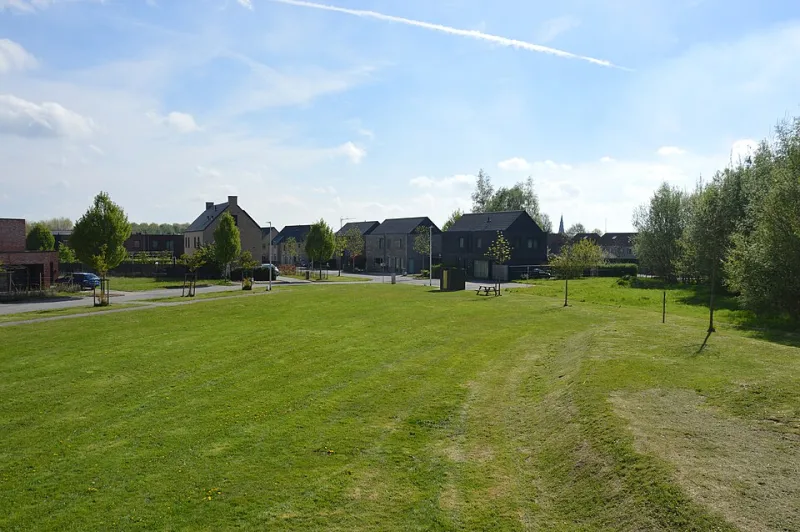
Smart Entry Points: A First-Time Buyer's Roadmap to Owning in Parkview

For many Americans, the idea of purchasing a first home occupies a peculiar space between aspiration and anxiety. The aspiration is straightforward—equity, stability, a place that is genuinely yours. The anxiety, however, is equally understandable. Real estate transactions involve large sums, unfamiliar terminology, and a timeline that rarely accommodates second-guessing. In a community like Parkview, where the market reflects a range of price points and neighborhood trajectories, first-time buyers who approach the process with preparation consistently fare better than those who rely on instinct alone.
This guide is designed to demystify the entry process—covering the financial groundwork, the hidden costs that catch new buyers off guard, the question of timing, and the neighborhoods within Parkview that represent genuine value for buyers working within budget constraints.
Building the Financial Foundation Before You Search
The single most common mistake among first-time buyers is beginning the property search before the financial picture is fully assembled. Enthusiasm for a specific listing is a poor substitute for mortgage pre-approval, and sellers in a competitive market will consistently favor buyers who have demonstrated their financial readiness.
The down payment is the most visible component of that foundation, but it is rarely the only one. Conventional loan programs typically require between five and twenty percent of the purchase price, with buyers who put down less than twenty percent generally required to carry private mortgage insurance, or PMI, as an added monthly cost. However, several loan programs specifically designed for first-time buyers—including FHA loans, which permit down payments as low as 3.5 percent, and certain state-level assistance programs—can meaningfully reduce the upfront cash requirement.
Buyers in the Parkview market should also investigate whether they qualify for down payment assistance grants administered at the county or municipal level. These programs vary in eligibility criteria and funding availability, and they are frequently underutilized simply because buyers are unaware they exist. A mortgage professional with local market experience is typically the most efficient resource for identifying applicable programs.
The Hidden Costs That Surprise New Buyers
Beyond the down payment, first-time buyers frequently underestimate the volume of additional expenses that accompany a real estate closing. Closing costs alone—encompassing lender fees, title insurance, attorney fees where applicable, prepaid property taxes, and homeowner's insurance premiums—commonly total between two and five percent of the loan amount. On a $350,000 purchase, that translates to between $7,000 and $17,500 in costs that arrive at the closing table.
Post-closing, new homeowners in Parkview should budget for immediate and near-term maintenance expenditures. A thorough pre-purchase home inspection will identify known issues, but all homes require ongoing upkeep, and first-year ownership frequently surfaces deferred maintenance that sellers did not disclose or were unaware of themselves. A prudent reserve of one to two percent of the home's value, set aside specifically for maintenance and repairs, provides a meaningful financial cushion during the adjustment period.
Property taxes and homeowner's association fees, where applicable, are recurring obligations that should be factored into the monthly affordability calculation from the outset. In Parkview, HOA structures vary considerably by neighborhood and development type, and the associated fees can range from nominal to substantial depending on the amenities and services covered.
Timing the Market: What First-Time Buyers Should Realistically Expect
The perennial question of whether to buy now or wait for a more favorable market is one that rarely produces a satisfying answer, because the honest response depends almost entirely on individual circumstances rather than macro-level market conditions.
What the data consistently demonstrates is that first-time buyers who delay purchase decisions in anticipation of price corrections frequently find that the corrections, when they occur, are offset by rising rents or shifting interest rates—leaving their financial position no more advantageous than it was at the point of initial hesitation. For buyers who have assembled a stable down payment, secured pre-approval at a manageable rate, and identified a property that meets their needs at a price within their means, the calculus typically favors moving forward.
In the Parkview market specifically, seasonal patterns do influence inventory and competition levels. The spring and early summer months historically produce the highest volume of listings but also the most competitive bidding environments. Buyers willing to search during the fall and winter months may encounter reduced competition and sellers who are more motivated to negotiate, even if the total inventory is somewhat lower.
Identifying Undervalued Neighborhoods with Appreciation Potential
For first-time buyers operating within a defined budget, the most financially productive strategy is often to identify neighborhoods that are currently priced below the community average but demonstrate indicators of near-term appreciation. In Parkview, several such areas merit attention.
Neighborhoods adjacent to recently completed or actively planned infrastructure improvements—new transit connections, park expansions, or commercial corridor revitalization projects—frequently experience price appreciation as those improvements are realized. Buyers who enter these areas before the broader market has fully priced in the anticipated changes stand to benefit from the resulting equity growth.
Areas with a high proportion of long-term homeowners and low turnover rates often signal neighborhood stability and community investment, both of which are positive indicators for sustained value. Conversely, blocks with concentrated investor activity and a high ratio of rental properties may carry greater volatility.
Engaging a buyer's agent with specific knowledge of Parkview's neighborhood-level dynamics is one of the most effective ways to identify these opportunities before they become obvious to the broader market.
A Final Word on Patience and Perspective
First-time homeownership in Parkview is an achievable goal for buyers who approach the process with realistic expectations and adequate preparation. The market rewards those who take the time to understand their financial position thoroughly, account for the full scope of purchase-related costs, and evaluate neighborhoods with an eye toward long-term value rather than immediate aesthetic appeal.
The path to a first home is rarely linear, and setbacks—a missed offer, a failed inspection, a rate fluctuation—are a normal part of the process rather than signals to abandon the pursuit. Buyers who maintain their criteria, manage their budgets conservatively, and work with experienced local professionals are consistently the ones who find their place in Parkview.