The Full Financial Picture: Neighborhood-Specific Ownership Costs That Parkview Buyers Rarely Anticipate

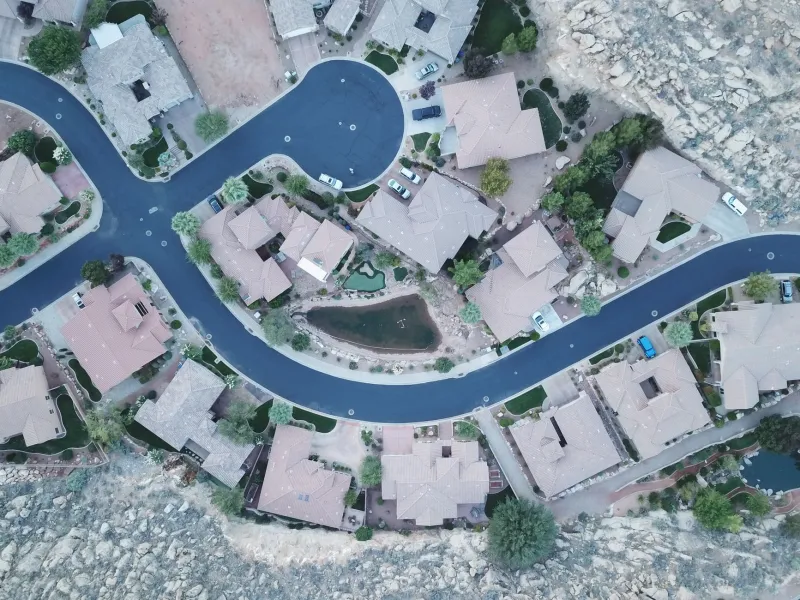
Photo: Consumer Financial Protection Bureau from United States, Public domain, via Wikimedia Commons
Two homes. Similar square footage. Nearly identical listing prices. And yet, one costs its owner thousands of dollars more per year to maintain, insure, and operate than the other. This is not an unusual scenario in Parkview — it is, in fact, a routine reality that catches underprepared buyers off guard with unsettling regularity.
The real estate industry has made meaningful progress in helping buyers understand headline costs: property taxes, homeowners association fees, and standard insurance premiums are now routinely incorporated into affordability conversations. What remains far less discussed — and far more consequential for long-term financial planning — are the neighborhood-specific, property-specific, and circumstance-specific expenses that vary considerably across Parkview's diverse residential landscape.
This guide is designed to help buyers look beyond the listing and budget with the kind of precision that protects both financial stability and peace of mind.
Flood Insurance: A Cost That Varies by Blocks, Not Just Zip Codes
Parkview, like many established communities developed across multiple decades and varied topography, contains neighborhoods with meaningfully different flood risk profiles. Properties situated in low-lying areas, near drainage corridors, or within designated FEMA Special Flood Hazard Areas face a financial reality that their neighbors on higher ground do not: mandatory flood insurance.
Standard homeowners insurance policies do not cover flood damage. Buyers purchasing in affected zones must obtain separate flood insurance, either through the National Flood Insurance Program (NFIP) or through private carriers. Annual premiums can range from several hundred dollars for lower-risk properties to well over two thousand dollars for homes in higher-risk classifications — and those figures are trending upward as FEMA continues to update its risk rating methodology under its Risk Rating 2.0 framework.
For buyers evaluating properties in Parkview's flatter or lower-elevation neighborhoods, the first step is a FEMA flood map consultation. The second is obtaining a flood insurance quote before making an offer, not after. The difference between a property that requires flood coverage and one that does not can represent a permanent, annual line item that fundamentally alters the economics of ownership.
Buyers should also be aware that elevation certificates — documents prepared by licensed surveyors that determine a property's precise elevation relative to flood benchmarks — can sometimes lower premiums substantially. Asking whether an existing certificate is on file for a property is a simple due diligence step that can yield significant savings.
Aging Infrastructure and the True Cost of Older Homes
Parkview's older residential districts carry a particular charm: mature tree canopies, architectural character, established community identity. They also carry infrastructure that reflects the era in which they were built — and that aging infrastructure has a financial dimension that buyers frequently underestimate.
Homes constructed prior to the 1980s may contain original plumbing in materials now known to be problematic, including galvanized steel pipes prone to corrosion and reduced water pressure, or cast iron drain lines susceptible to root intrusion and cracking. Electrical systems in homes of similar vintage may feature older panel configurations, aluminum wiring, or insufficient amperage for contemporary household demands. Replacement or upgrading of these systems is not inexpensive: a full electrical panel upgrade can run several thousand dollars, while whole-house re-piping projects in larger homes can approach five figures.
Roof systems, HVAC equipment, and insulation in older Parkview homes may also be approaching or past their functional life expectancy. A buyer who acquires a home with a roof that has five years of remaining useful life is implicitly accepting a capital expenditure of anywhere from eight thousand to twenty-five thousand dollars within a relatively near timeframe — a cost that should inform both their offer price and their emergency reserve planning.
The practical guidance here is straightforward: commission a thorough, specialist-level home inspection before closing, and request documentation on the ages of all major systems. Factor deferred maintenance and near-term capital replacements into your total cost of ownership calculation, not merely your monthly mortgage payment.
Utility Costs: How Infrastructure Age Affects Monthly Expenses
Beyond the capital costs of aging systems lies a more subtle but equally persistent expense: elevated monthly utility bills driven by inefficient infrastructure.
Homes with inadequate insulation, single-pane windows, or HVAC systems operating past peak efficiency consume meaningfully more energy to maintain comfortable interior temperatures than their modern counterparts. In Parkview's climate, where both summer cooling and winter heating represent genuine demands on residential energy systems, this inefficiency translates directly into higher monthly gas and electric bills.
Buyers comparing two similarly priced properties — one newer construction and one a mid-century home — should request utility history from the seller as part of their due diligence. Many utility providers in the U.S. will also provide twelve-month consumption summaries upon request, which offer a more complete picture than a single month's bill. The annualized difference between an energy-efficient home and an inefficient one can easily reach one thousand to two thousand dollars or more, depending on the property's size and the severity of its deficiencies.
Some of these gaps can be narrowed through targeted improvements — air sealing, attic insulation upgrades, smart thermostats — at relatively modest cost. Others, such as window replacement or full HVAC system overhauls, require more substantial investment. Understanding where a specific property sits on this spectrum before closing is essential to accurate budgeting.
Accessibility Upgrades and the Aging-in-Place Equation
A growing segment of Parkview's buyer population is purchasing with a long-term horizon explicitly in mind — one that accounts for the physical realities of aging. For these buyers, the question of accessibility is not abstract. It is a financial planning consideration with real dollar figures attached.
Homes that lack single-floor living options, that feature narrow doorways incompatible with mobility aids, or that have bathrooms unequipped for safe use by individuals with limited mobility may require significant modification over time. Grab bar installation, walk-in shower conversions, stair lift systems, and exterior ramp construction are all expenses that can accumulate into tens of thousands of dollars depending on the scope of modifications required.
Parkview neighborhoods differ considerably in how well their existing housing stock accommodates these needs. Newer construction in certain districts was built to more accessible standards; ranch-style homes in established neighborhoods often offer natural advantages in terms of single-level living. Buyers with aging-in-place as a stated goal should evaluate properties not only for their current condition but for their modification potential — and should obtain preliminary cost estimates for any anticipated adaptations before finalizing their purchase decision.
HOA Assessments: Beyond the Monthly Fee
For buyers in Parkview communities governed by homeowners associations, the monthly or annual fee is only one dimension of the financial relationship. Special assessments — one-time charges levied to fund major communal repairs or improvements not covered by reserves — represent a less predictable but potentially substantial expense.
Before purchasing in any HOA-governed community in Parkview, buyers are strongly advised to review the association's reserve fund study, its most recent financial statements, and the minutes from recent board meetings. A reserve fund that is significantly underfunded relative to the association's anticipated capital needs is a warning sign that a special assessment may be forthcoming. These assessments can range from a few hundred dollars to several thousand per unit, and they arrive with limited advance notice.
Building a Realistic Budget for the Home You're Considering
The goal of this analysis is not to discourage buyers from engaging with Parkview's market — it is to equip them with the information necessary to make confident, well-informed decisions. A home that appears to strain the upper boundary of a buyer's budget may, after a thorough cost-of-ownership assessment, prove entirely manageable. Conversely, a property that appears comfortably affordable at first glance may carry hidden annual expenses that erode that comfort significantly over time.
The most effective approach is to treat total annual ownership cost — not purchase price alone — as the primary financial metric. That figure should incorporate mortgage principal and interest, property taxes, insurance (including any specialty policies required), HOA fees, estimated utility costs, a reasonable annual maintenance reserve, and any near-term capital expenditures identified during the inspection process.
Parkview offers a genuinely compelling residential environment across its many distinct neighborhoods. Buyers who do the financial homework to understand the full picture of what ownership costs in each of those neighborhoods will find themselves not only better protected — but better positioned to enjoy everything this community has to offer.