Fool's Gold in Parkview: How to Tell a Genuine Bargain from a Property the Market Has Already Written Off
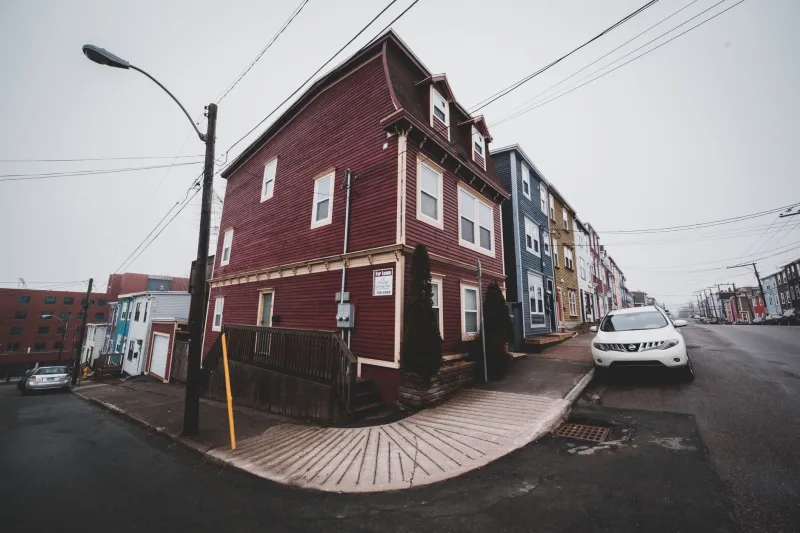
In any real estate market, the most dangerous transaction is the one that feels like a steal. A listing priced well below its neighbors, sitting on the market just long enough to generate curiosity — it can look like the discovery of a lifetime. In Parkview, however, a growing subset of these apparent bargains are something else entirely: properties that have been quietly abandoned by informed buyers, discounted not through seller generosity but through market consensus.
Understanding the difference between a mispriced gem and a structurally compromised asset requires more than a walkthrough and a favorable inspection report. It demands a careful reading of neighborhood-level trends, infrastructure conditions, demographic shifts, and competitive development pressures that rarely surface in a standard listing description.
The Stall Pattern: Neighborhoods Where Appreciation Has Gone Quiet
Parkview's broader market has demonstrated resilience over the past several years, with median sale prices holding firm or rising across most of its established corridors. Yet a closer look at transaction data reveals a more complicated picture in specific pockets of the community.
Certain neighborhoods — particularly those anchored by mid-century housing stock and positioned at the edges of Parkview's more sought-after districts — have seen price appreciation flatten or, in some cases, reverse. Days on market in these areas have extended noticeably, and the ratio of list price to final sale price has begun to compress. These are not the signatures of a market taking a temporary breath. They are the early indicators of structural underperformance.
What separates a stalling neighborhood from one in temporary correction is the nature of the forces driving the slowdown. Cyclical corrections respond to interest rate environments and broader economic conditions. Structural stalls, by contrast, are rooted in factors that do not resolve on their own — aging infrastructure, shifting buyer demographics, and the competitive pressure of newer development nearby.
Aging Infrastructure and the Hidden Cost Buried Beneath the Surface
Parkview's older residential zones carry a particular liability that rarely appears in a listing's marketing copy: the compounding cost of infrastructure that has reached or exceeded its functional lifespan. Homes built in the 1950s and 1960s — a significant portion of the housing stock in several of Parkview's established neighborhoods — frequently contain original plumbing, outdated electrical panels, and foundation systems that were designed for a different era of load and use.
The problem is not the age of these systems in isolation. It is the timing of their failure relative to the buyer's financial position. A purchaser who acquires a modestly priced home in one of these corridors may find themselves absorbing five- or six-figure remediation costs within the first few years of ownership — costs that were effectively baked into the discount they received at closing, but were never made explicit.
Municipal infrastructure compounds this dynamic. In areas where water and sewer lines have not been upgraded as part of recent improvement projects, individual homeowners often bear disproportionate responsibility for lateral connections and street-level tie-ins. Buyers who do not investigate the age and condition of these systems before purchasing are frequently surprised to discover that their bargain comes with a repair obligation that extends well beyond their property line.
Demographic Transition and the Buyer Pool Contraction
Real estate values are sustained, in large part, by the depth and diversity of the buyer pool willing to compete for available inventory. When that pool narrows — whether through demographic aging, household income shifts, or changes in the types of buyers a neighborhood attracts — prices follow.
Several of Parkview's longer-established residential areas are experiencing exactly this kind of contraction. Neighborhoods that once drew young families are aging in place, producing a homeowner demographic that is gradually transitioning out of the market without a comparable cohort moving in behind them. The reasons vary: school attendance zone boundaries that have shifted, transit access that has not kept pace with where younger buyers now work, and housing configurations — large lots with modest square footage, for example — that do not align with contemporary buyer preferences.
This is not a crisis, but it is a signal. A neighborhood whose housing stock is turning over slowly, whose buyers skew older, and whose rental inventory is expanding relative to owner-occupied units is one where near-term appreciation prospects are limited and where the competitive disadvantage relative to Parkview's more dynamic corridors is likely to widen before it narrows.
Development Competition: When Nearby Growth Becomes a Headwind
Parkview's development pipeline has added considerable new inventory in targeted areas — a trend that has been broadly positive for the community's long-term vitality, but that carries specific consequences for existing housing stock in adjacent or competing locations.
New construction offers buyers something that resale properties in aging neighborhoods categorically cannot: a warranty, modern systems, and the psychological comfort of knowing that what you see is what you get. When new developments are priced within a reasonable range of older resale inventory, a meaningful portion of the buyer pool will choose the new build — particularly buyers in the first-time and move-up segments who are most sensitive to future maintenance exposure.
The neighborhoods most vulnerable to this competitive displacement are those positioned close enough to new development corridors to lose buyers to them, but not close enough to benefit from the spillover appreciation that sometimes accompanies growth. Properties in this middle zone face a structural pricing ceiling that is difficult to overcome regardless of individual condition or seller motivation.
How to Distinguish Value from a Market Verdict
None of this is to suggest that Parkview's slower markets are uniformly without merit. Some properties in underperforming areas represent genuine value — homes where the discount reflects temporary seller circumstances rather than systemic neighborhood decline, or where infrastructure liabilities are known, quantifiable, and already priced into the ask.
The discipline required to make that distinction involves several concrete steps. First, buyers should request a comprehensive review of municipal records for the target property and street, including the age of utility infrastructure and any outstanding improvement assessments. Second, a structural inspection should extend beyond the standard visual review to include sewer scope, electrical load analysis, and, where applicable, foundation assessment by a licensed engineer. Third, buyers should analyze the neighborhood's absorption rate — the pace at which comparable homes are moving — over a rolling 24-month window rather than the most recent quarter alone.
Finally, and perhaps most importantly, buyers should ask why the price is what it is. A discount that cannot be explained by seller circumstance, property condition, or temporary market timing is almost always explained by something the broader market has already recognized. In Parkview's most competitive corridors, that recognition tends to be accurate.
The Long View on Parkview Value
Parkview remains a community with genuine long-term appeal — its established identity, green spaces, and neighborhood character continue to attract buyers across multiple life stages. But the market is not monolithic, and the discipline of distinguishing between its stronger and weaker segments is one of the most valuable skills a prospective buyer can develop.
A home purchased in the right Parkview neighborhood at a fair price is a sound investment. A home purchased in the wrong one, at a price that only appears favorable, is a different proposition entirely — one whose true cost typically reveals itself not at closing, but in the years that follow.