When Location Loses Its Edge: How Remote Work Is Rewriting the Rules for Parkview Home Sellers
For the better part of a decade, a Parkview listing within a short drive of a major employment hub was practically its own closing argument. Sellers in transit-adjacent neighborhoods could price confidently, knowing that commute efficiency carried real monetary weight for buyers. That calculus has shifted in ways that are only now becoming visible in offer patterns, days-on-market data, and frank conversations between agents and their clients.
The rise of permanent and hybrid remote work has not simply changed where people want to live—it has fundamentally altered what they need a home to do. And in several Parkview neighborhoods, sellers are discovering that their most-marketed feature may no longer be their most persuasive one.
The Commute Premium, Reconsidered
Historically, real estate economists have documented what is sometimes called the "commute premium"—the measurable price bump that homes near employment centers command over otherwise comparable properties located farther out. In markets like Parkview, that premium was baked into listing strategies almost reflexively. An address near a freeway on-ramp or a light rail stop was shorthand for value.
Today, a growing segment of buyers has effectively opted out of that framework. According to national labor surveys, roughly one in three knowledge workers now operates on a fully remote schedule, with a substantial additional share working hybrid arrangements that require office presence only two or three days per week. For these buyers, a ten-minute commute advantage is worth considerably less than it once was—and in some cases, it is actively irrelevant.
What this means for Parkview sellers in traditionally commute-centric neighborhoods is that the positioning language that once moved listings quickly may now be generating indifference. Buyers who will never sit in rush-hour traffic are not moved by the promise of avoiding it.
Which Parkview Neighborhoods Feel the Shift Most Acutely
Not all areas of Parkview are experiencing buyer hesitation equally. The neighborhoods most affected tend to share a common profile: they were developed or densified primarily to serve office workers, and their surrounding amenities, lot sizes, and home configurations reflect that original purpose.
Properties in denser, transit-proximate corridors—where square footage was historically compressed in exchange for location efficiency—are now competing with listings in more spacious, quieter sections of Parkview that remote workers find genuinely appealing. A buyer who logs into a video call from home five days a week does not need to be close to anything in particular. What that buyer does need is a dedicated workspace, reliable high-speed internet infrastructure, outdoor access for midday breaks, and enough interior square footage to accommodate professional and personal life under the same roof.
Neighborhoods in Parkview that offer larger floor plans, mature tree canopy, lower ambient noise, and access to parks or trails are attracting sustained buyer interest even when they sit farther from downtown employment anchors. Meanwhile, some sellers in historically premium commute zones are watching showings slow and receiving feedback that homes feel "too small" or "too urban" for what buyers now envision as their daily environment.
The Seller's Strategic Response
Reframing a property's value proposition is not the same as misrepresenting it. Sellers in commute-adjacent Parkview neighborhoods have legitimate strengths to emphasize—they simply need to identify and articulate those strengths through a lens that speaks to today's buyer.
Emphasize infrastructure over access. Buyers working from home care deeply about internet reliability. If a property is served by fiber-optic broadband or a provider known for consistent upload speeds, that detail belongs in the listing description prominently—not buried in a footnote.
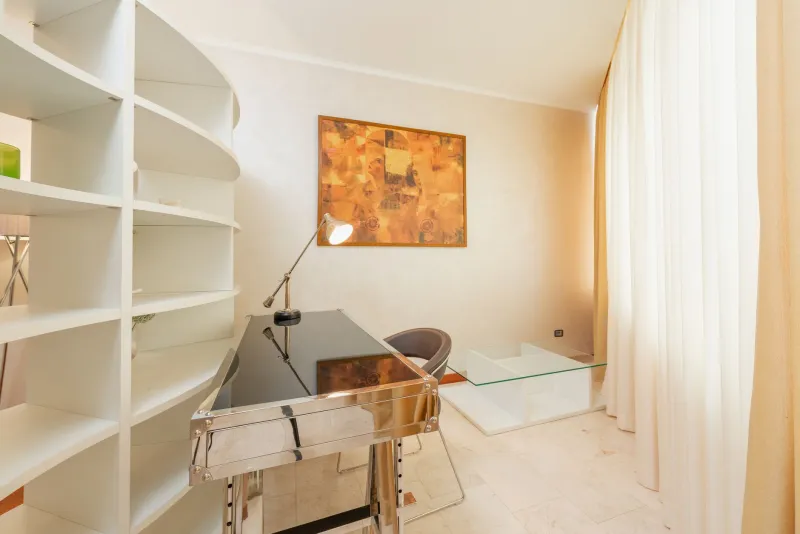
Stage for function, not just aesthetics. A spare bedroom that photographs as a generic room with a bed tells a remote worker nothing useful. Staging that same space as a fully realized home office—with proper lighting, a credible desk setup, and visual organization—allows buyers to project themselves into a working day at that address.
Reframe walkability in lifestyle terms. Walkability scores that were once marketed as commute conveniences can be repositioned as quality-of-life assets. Coffee shops, lunch spots, fitness studios, and neighborhood markets matter to someone who leaves the house by choice throughout the day, not by necessity in the morning.
Acknowledge the floor plan honestly. Buyers are sophisticated. If a home's layout does not easily accommodate a home office, sellers and their agents should address that directly and suggest practical solutions—a converted dining room, a detached garage with utility potential, or a permitted addition that a buyer could undertake. Honesty about limitations, paired with creative framing, builds more trust than evasion.
What the Data Is Beginning to Reflect
National transaction data from the past two years shows a consistent pattern: homes with dedicated office space or a readily convertible room are selling faster and closer to list price than comparable homes without that feature. In markets where remote work adoption is high, the spread between these two cohorts has widened meaningfully.
Parkview is not immune to these dynamics. Agents active in the community have noted that buyer questionnaires—the informal wish lists that buyers share during early consultations—now routinely include home office space as a top-three priority, a category that barely registered five years ago.
For sellers, this is not cause for alarm. It is cause for recalibration. The buyers are still out there, and Parkview remains a desirable community by virtually any measure. The opportunity lies in understanding that the buyer arriving at a showing today may be evaluating the home through an entirely different professional lens than the buyer who purchased it a decade ago.
Repositioning as a Competitive Advantage
Sellers who recognize the shift early and adapt their marketing accordingly are not simply reacting to market pressure—they are gaining a competitive edge over neighbors who continue presenting their homes through outdated assumptions.
The Parkview market rewards preparation. Sellers who invest in modest home office staging, who ensure their broadband details are documented and prominent, and who work with their agents to craft listing narratives that speak to the rhythms of a remote-work lifestyle are positioning themselves to attract motivated, qualified buyers in a segment that is only growing.
The commute premium has not disappeared entirely. But in a market where a significant share of buyers will never need it, the sellers who thrive will be those who find the next compelling reason to say yes.