When Sellers Get in Their Own Way: The Emotional Blind Spots Stalling Parkview Listings
Parkview's housing market rewards preparation. Buyers here are discerning, well-researched, and accustomed to moving decisively when the right property appears. That dynamic should, in theory, work to every seller's advantage. And yet, a recurring pattern emerges in local listing data: homes that are priced accurately, located in desirable pockets of the community, and structurally sound still accumulate days on market at a rate that defies straightforward explanation.
The answer, in many cases, has less to do with square footage or comparable sales and more to do with the seller's interior life. Emotional attachment to a property—however understandable—can manifest in ways that are immediately legible to buyers, even when sellers themselves are unaware of the signals they are sending. Understanding these behavioral patterns is not simply a matter of staging philosophy. It is a market strategy with measurable consequences for sale price and timeline.
The Problem With Selling a Memory
For most homeowners, a property is not merely an asset. It is the backdrop to a decade of milestones—children's birthdays, holiday gatherings, quiet Sunday mornings. That accumulation of meaning is natural and, in many respects, admirable. However, when it bleeds into how a home is presented to prospective buyers, it creates a form of visual and emotional noise that disrupts the buyer's ability to imagine their own life within those walls.
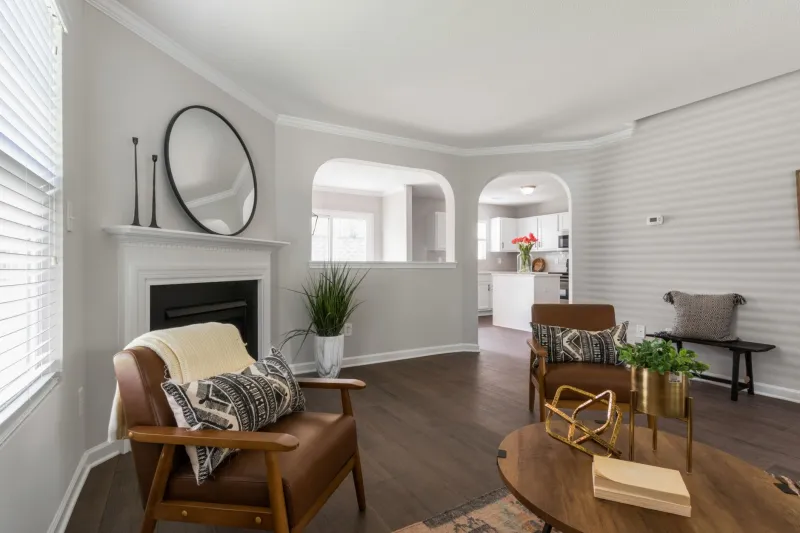
Buyers touring a home in Parkview are engaged in an act of projection. They are mentally furnishing rooms, envisioning routines, and calculating whether this particular address can accommodate their particular version of a future. When a home is saturated with another family's history—gallery walls dense with personal photographs, children's artwork laminated onto refrigerator doors, monogrammed towels in every bathroom—that imaginative process is interrupted. The buyer is no longer projecting forward. They are observing someone else's past.
This is not a minor aesthetic inconvenience. Research in consumer behavior consistently demonstrates that personalization cues reduce a prospective buyer's sense of psychological ownership over a space. In practical terms, that translates to shorter showings, fewer second visits, and offers that either don't materialize or arrive below asking price.
Five Behavioral Patterns That Extend Time on Market
1. Refusing to Depersonalize High-Traffic Spaces
The entry foyer, the primary living area, and the kitchen are the three spaces that most decisively shape a buyer's first impression. When these rooms are heavily personalized—whether through family portraits, religious iconography, politically charged décor, or deeply idiosyncratic color choices—they signal to buyers that the home has been lived in on someone else's terms. Sellers who resist professional advice to neutralize these spaces often do so out of a genuine sense that removing personal items diminishes the home's warmth. The opposite is typically true. Neutral, well-staged spaces allow buyers to supply their own emotional warmth, which is a far more powerful motivator.
2. Overpricing Based on Sentimental Value
This is perhaps the most financially consequential pattern in Parkview's market. Sellers who have invested years of labor, love, and personal capital into a property frequently arrive at a listing price that reflects what the home means to them rather than what the market will bear. The distinction matters enormously. A price inflated by sentiment is not simply a negotiating position—it is a signal to experienced buyers and their agents that the seller may be difficult to work with. Properties carrying this perception tend to attract fewer showings, even when the gap between asking price and market value is relatively modest.
3. Hovering During Showings
In Parkview, as in most active markets, sellers who insist on being present during buyer tours create a documented chilling effect on candid evaluation. Buyers are reluctant to open closets, test appliances, linger in rooms, or speak freely with their agents when the homeowner is present. The result is a compressed, guarded showing experience that rarely converts to an offer. The impulse to be present is understandable—sellers want to advocate for their home, to explain the custom built-ins or the history of the garden. But that impulse, however well-intentioned, consistently works against the sale.
4. Selective Disclosure Motivated by Attachment
Sellers who are deeply invested in a property sometimes unconsciously minimize disclosures about known issues—not out of deception, but out of a protective instinct toward the home itself. A crack in the foundation that has been monitored for years becomes, in the seller's narrative, a "minor settling issue." A recurring basement moisture problem becomes "something we addressed a while back." Buyers and their inspectors are not fooled. When issues surface during the inspection process that were not adequately disclosed upfront, the transaction frequently collapses—or survives only after significant price renegotiation. Transparency, even about imperfections, builds the trust that keeps deals together.
5. Resisting Staging Recommendations
Professional staging in Parkview's market is not a luxury reserved for high-end listings. It is a documented value-add that consistently reduces time on market and supports stronger final sale prices. Yet sellers who have arranged their homes according to personal taste over many years often push back on staging guidance with genuine conviction. The resistance is rarely about cost. It is about identity. Accepting that a home must be transformed for sale requires acknowledging that the version the seller loves is not necessarily the version that the market values. That is a psychologically difficult concession, and sellers who cannot make it tend to pay for that difficulty in extended listing timelines.
Reframing the Sale as a Transaction, Not a Tribute
The most effective shift a Parkview seller can make is conceptual rather than cosmetic. Approaching a home sale as a business transaction—one that requires the same discipline and objectivity applied to any significant financial decision—creates the psychological distance necessary to accept professional guidance without defensiveness.
This does not mean sellers must be indifferent to the homes they are leaving. Grief over a meaningful place is legitimate and deserves acknowledgment. But that emotional process is best conducted privately, in parallel with the practical work of preparing a property for market. When the two are allowed to intermingle, the result is a listing that communicates ambivalence to buyers—and ambivalent sellers rarely achieve the outcomes they are hoping for.
What the Data Reflects
Across Parkview's recent listing history, homes that spend more than thirty days on market without a price reduction tend to share a recognizable profile. They are not uniformly overpriced or structurally compromised. Many are, by objective measures, desirable properties. What they share, more often than not, is evidence of a seller who has not yet completed the psychological transition from homeowner to vendor.
For buyers, extended days on market can signal opportunity—a motivated seller who has finally reconciled with market reality. For sellers, it represents a costly delay that erodes negotiating leverage and, in some cases, invites stigma that proves difficult to overcome regardless of subsequent price adjustments.
The Practical Path Forward
Sellers preparing to list in Parkview are well-served by engaging a listing agent early—not at the point of listing, but weeks beforehand. That lead time allows for honest conversation about pricing, presentation, and the emotional work that precedes a successful sale. It also allows for staged depersonalization to occur gradually, which many sellers find less jarring than a single, sweeping intervention.
The Parkview market does not penalize sellers for loving their homes. It does, however, penalize sellers for allowing that love to interfere with the buyer's experience. Recognizing the difference is, ultimately, the first step toward a successful transaction.