Building Pains: What Parkview's Construction Surge Really Means for Nearby Homeowners
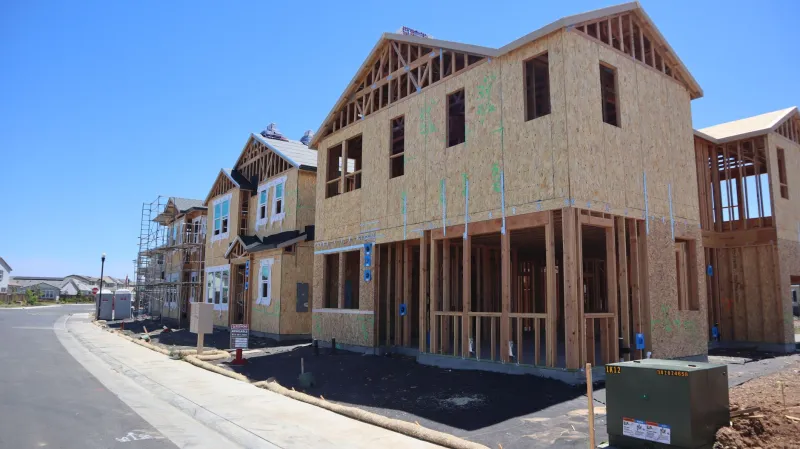
Parkview's development momentum has been a consistent headline for the better part of three years. Cranes punctuate the skyline in several sub-neighborhoods, permit filings are running well above historical averages, and new residential listings routinely tout proximity to "an evolving and growing community." For investors and civic boosters, this trajectory reads as unambiguously positive. For the homeowners who already live within earshot of an active job site, the picture is considerably more complicated.
This piece examines what the construction boom is actually doing to property values, resale timelines, and everyday livability in the neighborhoods closest to active development — and what buyers and sellers need to understand before making decisions in those corridors.
The Appraisal Problem Nobody Puts in Writing
Appraisers working in Parkview's more active development zones describe a recurring challenge: how do you value a property that sits adjacent to a construction site when the finished product — once complete — may actually enhance surrounding values, but the interim period is measurably depressing them?
The answer, according to professionals familiar with the local market, is that most appraisers apply a temporary adjustment, sometimes referred to informally as a "construction discount," that reflects current market conditions without attempting to project post-completion appreciation. This discount can range from modest — two to four percent for properties a few blocks away — to more significant reductions of six to ten percent for homes sharing a fence line or direct sightline with an active site.
What makes this particularly consequential for sellers is timing. A homeowner who purchased in one of Parkview's transitional corridors two or three years ago, anticipating that nearby development would lift their property's value, may find that the construction phase itself is the worst possible moment to list. Appraisals come in lower than expected, financing contingencies become friction points, and the pool of willing buyers narrows.
What Buyers Are Actually Responding To
Buyer psychology around construction proximity is nuanced and, frankly, inconsistent. Some purchasers — particularly investors and long-horizon buyers — explicitly seek out properties adjacent to development sites, reasoning that short-term disruption is the price of entry for long-term appreciation. Others, especially families with young children or buyers prioritizing immediate livability, treat construction proximity as a disqualifying condition regardless of the eventual upside.
Real estate professionals working Parkview's active corridors note that the nature of the adjacent project matters enormously. A mid-rise mixed-use development with a defined 18-month build timeline reads very differently to a prospective buyer than an open-ended infrastructure project or a phased residential community where construction activity may persist for five or more years. Buyers who take the time to research project timelines — through the city's permitting portal or direct inquiries with the developer — are generally better positioned to make rational decisions. Many, however, do not.
Days on market in blocks immediately surrounding active Parkview construction sites have, in several documented cases, run 20 to 35 percent longer than comparable properties in quieter sections of the same neighborhood. Price reductions are also more common in these corridors, though the magnitude varies considerably based on project type and the seller's urgency.
The Livability Ledger
Beyond the transactional implications, residents living near active Parkview job sites describe a quality-of-life impact that is difficult to fully capture in market data. Construction noise — particularly from heavy equipment, concrete pours, and steel work — can begin as early as 7:00 a.m. on weekdays and, depending on permit conditions, may extend into early evening hours. For remote and hybrid workers, who now represent a substantial share of Parkview's residential population, this is not a peripheral inconvenience. It is a direct interference with their professional environment.
Dust migration, increased truck traffic on residential streets, and temporary disruptions to pedestrian infrastructure compound the acoustic impact. Several residents in Parkview's more active development zones have described difficulty using outdoor spaces — patios, front porches, small yards — for extended periods during peak construction phases. The cumulative effect on daily satisfaction is real, even if it rarely appears in listing disclosures.
Contractors and project managers, for their part, emphasize that responsible developers make genuine efforts to minimize neighborhood disruption: scheduling the noisiest work for mid-morning hours, maintaining clean site perimeters, and communicating proactively with adjacent property owners. Whether those efforts are consistently implemented — and consistently experienced as sufficient by residents — is another matter.
When the Dust Settles: The Long View
It would be misleading to frame construction proximity as purely negative. Parkview's historical record offers meaningful evidence that well-executed development projects do, over time, lift surrounding property values. Neighborhoods that absorbed significant construction disruption five to seven years ago — and where residents loudly questioned whether the trade-off was worth it — are now among the most sought-after addresses in the community. The correlation between thoughtful development and long-term appreciation is well established.
The more honest framing is one of horizon alignment. For a buyer who intends to hold a property for seven to ten years, purchasing adjacent to an active Parkview development site may represent a genuine opportunity, particularly if the project type — residential, mixed-use, community amenity — is consistent with the neighborhood's broader trajectory. For a buyer with a three-to-five-year timeline, or a seller who needs to transact in the next 12 to 18 months, the calculus is far less favorable.
What Sellers in Construction-Adjacent Blocks Should Know
For current homeowners in Parkview's active development corridors who are considering a sale, a few practical considerations deserve attention.
First, timing relative to construction milestones matters more than most sellers anticipate. Listing immediately after a major phase of work concludes — once the noisiest activity has passed and the site begins to take visible shape — can meaningfully improve buyer perception compared to listing during peak disruption.
Second, transparency in marketing is both an ethical obligation and a strategic asset. Buyers who discover construction proximity on their own, without it being addressed in listing materials, tend to respond with suspicion and aggressive price negotiation. Sellers who acknowledge the context directly, frame the long-term upside credibly, and provide documentation of project timelines are generally better positioned to attract serious, informed buyers.
Third, pricing discipline is essential. Construction-adjacent properties that are priced as though the disruption does not exist tend to sit, accumulate price reductions, and ultimately close at a steeper discount than a more realistic initial price would have produced.
A Market in Motion
Parkview's construction boom is, by most reasonable measures, a net positive for the community's long-term health — expanding housing supply, modernizing aging commercial corridors, and attracting the kind of sustained investment that supports property values across the board. But markets are experienced in the present tense, and for the residents and property owners living closest to active development, the present tense involves real costs that deserve honest acknowledgment.
Buyers considering properties in Parkview's transitional zones should conduct thorough due diligence: research active permits in the surrounding blocks, ask pointed questions about project timelines, and assess their own tolerance for disruption against their investment horizon. Sellers in those same zones should engage with the reality of their market position rather than resist it.
The opportunity in Parkview's growth story is genuine. So is the friction that comes with it.