Old Bones, Fast Sales: Why Parkview's Historic Homes Are Outpacing New Construction at the Closing Table
There is a widely held assumption in residential real estate that newer is better. Stainless appliances, open-concept layouts, and smart home integrations carry an obvious appeal, and for much of the past decade, new construction commanded both premium pricing and swift buyer attention. In Parkview, however, that assumption is being quietly dismantled.
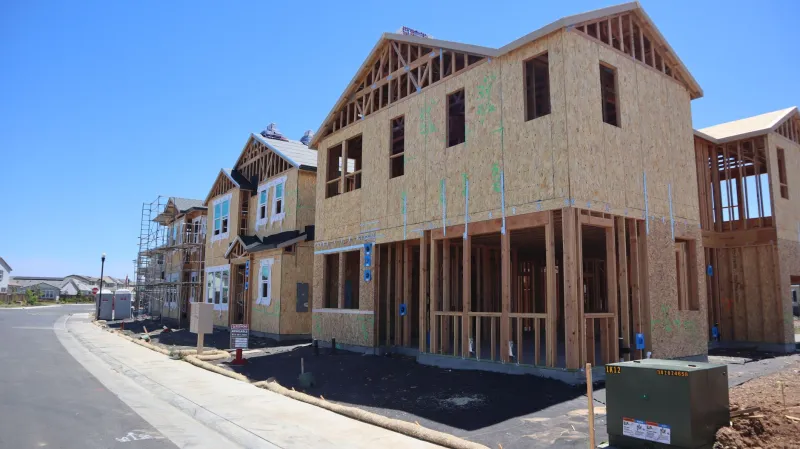
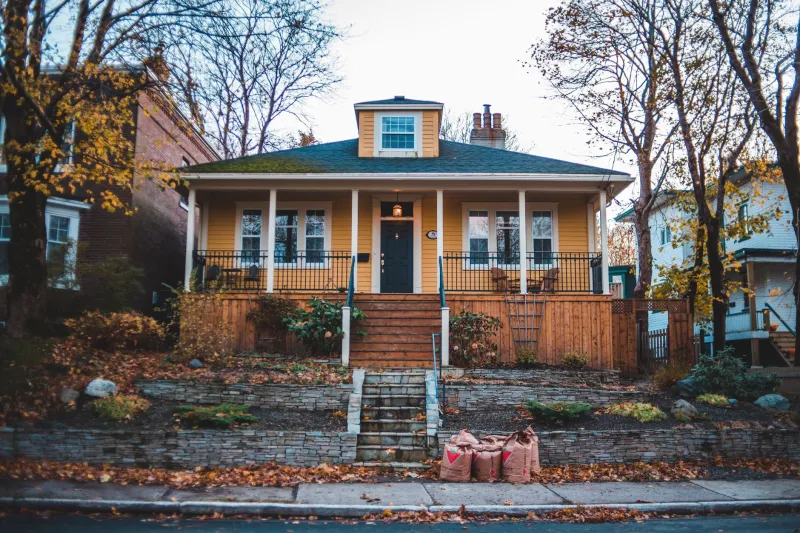
A pattern has emerged over recent market cycles that is drawing the attention of local agents, appraisers, and buyers alike: homes built in the mid-twentieth century — many featuring original hardwood floors, plaster walls, mature landscaping, and the kind of architectural detail that simply cannot be replicated at scale — are consistently selling faster than their newly constructed counterparts. Meanwhile, several new-build developments within Parkview's boundaries are reporting extended days on market, incremental price reductions, and a buyer hesitancy that their developers did not anticipate.
This is not a minor statistical blip. It is a structural shift worth examining carefully.
What the Numbers Are Actually Saying
Without citing proprietary data, the directional trend is visible in how listings behave once they hit the market. Established homes in Parkview's older residential corridors — particularly those with documented histories, original architectural features, and proximity to the neighborhood's most mature tree canopies — are routinely attracting multiple offers within the first week of listing. New construction, by contrast, is frequently sitting for thirty, sixty, and in some cases ninety or more days before entering contract.
The price-per-square-foot comparison is where the story becomes especially instructive. In several Parkview submarkets, older homes are achieving per-square-foot values that match or exceed those of newly built properties, despite the new construction's modern systems, energy efficiency certifications, and builder warranties. That convergence suggests buyers are assigning meaningful value to qualities that square footage and finish-level alone cannot explain.
The Psychology Behind the Preference
Buyer motivation is rarely reducible to a single factor, but conversations with Parkview residents and prospective buyers reveal a consistent thread: established homes feel proven. The neighborhood around a 1950s bungalow or a 1960s colonial has already demonstrated its character. The neighbors are known quantities. The mature oak in the backyard has survived decades of storms. The street itself carries a kind of institutional memory that a freshly graded lot simply cannot offer.
This is not mere sentimentality. For buyers making the largest financial commitment of their lives, demonstrated stability functions as genuine risk mitigation. A neighborhood that has maintained its desirability across multiple economic cycles is, in a meaningful sense, a lower-risk investment than one whose long-term trajectory remains unwritten.
There is also the matter of irreplaceability. Craftsman millwork, original hardwood floors with their patina of age, brick fireplaces built when masonry was a skilled trade rather than an aesthetic afterthought — these elements cannot be authentically reproduced in new construction without costs that would make the project economically unviable. Buyers who recognize this understand they are acquiring something genuinely scarce.
The Hidden Calculus of New Construction
New construction carries a set of financial dynamics that buyers are becoming increasingly sophisticated about evaluating. Builder warranties, often cited as a primary selling point, come with conditions, exclusions, and claim processes that can prove more cumbersome than anticipated. Structural warranties may extend for ten years, but the practical experience of resolving a warranty claim with a large regional builder is frequently less straightforward than the marketing language implies.
Beyond warranties, new construction in Parkview often sits within homeowners associations with monthly fees, architectural review requirements, and community rules that can feel restrictive to buyers accustomed to the relative autonomy of established single-family neighborhoods. These carrying costs, when amortized over a typical ownership period, can meaningfully narrow the financial advantage that new construction's efficiency gains are supposed to provide.
There is also the question of what surrounds a new development. Infrastructure matures over time. The retail, dining, and service ecosystem that makes a neighborhood genuinely livable develops across years and decades, not months. Buyers purchasing into a newly built community are, in effect, betting on a future that has not yet arrived. Buyers purchasing into Parkview's established corridors are acquiring access to an ecosystem that already exists and has already proven its durability.
What Sellers of Older Homes Should Understand
For owners of Parkview's character properties, this market dynamic represents a genuine opportunity — but one that requires thoughtful positioning to fully capture. The features that are driving buyer demand are often the same ones that owners have long taken for granted: original flooring, vintage tile work, established gardens, and the accumulated small details that give a home its particular personality.
Preparation matters enormously in this environment. Buyers drawn to historic character are also attentive to deferred maintenance and signs that a home's bones have not been properly cared for. Sellers who invest in thoughtful pre-listing repairs — addressing mechanical systems, refreshing paint in period-appropriate palettes, ensuring that original features are clean and properly presented — are consistently seeing the strongest offers.
Professional photography that captures the quality of natural light in rooms with original windows, the warmth of aged hardwood, and the scale of mature landscaping is not a luxury in this market. It is a necessity. The buyers most likely to move quickly and pay well for these properties are making initial decisions based on how a listing presents itself online.
What New Construction Developers Are Navigating
It would be overly simplistic to characterize new construction as a poor choice for Parkview buyers. There are households for whom modern layouts, energy efficiency, and the absence of deferred maintenance concerns represent genuine priorities. The challenge for developers is that the pool of buyers for whom those attributes outweigh the appeal of established character has narrowed.
Some developers operating in Parkview have responded by incorporating design elements that gesture toward historical precedent — board and batten exteriors, craftsman-style trim packages, front porches scaled for actual use rather than aesthetic suggestion. Whether these approaches successfully bridge the gap between new and established remains an open question, but they reflect an awareness that the market is communicating something important about what buyers actually want.
Reading the Market Correctly
For buyers navigating Parkview's current conditions, the data supports a straightforward conclusion: the conventional premium assigned to new construction is not operating as expected in this market. Buyers who might have assumed that a newly built home represents an inherently safer or more valuable purchase should examine that assumption carefully against the evidence available in Parkview's current listings.
Established character properties, priced and presented well, are moving with a velocity that reflects genuine, broad-based demand. That demand is not driven by nostalgia alone — it is driven by a reasoned assessment of what stability, scarcity, and proven neighborhood quality are actually worth.
In Parkview, it appears, the market has already done that math.