Backyard Math: Does an ADU Add Value on Your Parkview Lot?
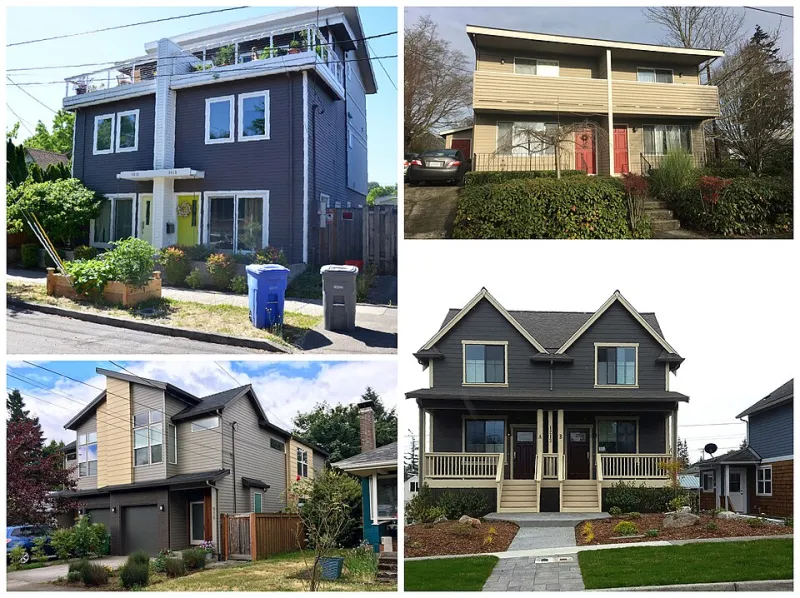
Photo: Sightline Institute: Missing Middle Homes Photo Library, CC BY 2.0, via Wikimedia Commons
Accessory dwelling units have become a familiar answer to a complicated housing question. Policymakers promote them as gentle density. Homeowners see rental income, space for relatives, or a home office with its own entrance. In Parkview, however, an ADU is not a universal upgrade. It is a parcel-specific calculation, and the result depends less on the promise of the concept than on the dimensions, utilities, rules, and buyer expectations attached to a particular lot.
What an ADU actually is in Parkview
The term covers several products: a detached cottage, a garage conversion, an attached unit, or an interior conversion within the main house. Each has a different cost profile and approval path. A garage conversion may be the least expensive route, but it can remove parking that buyers value. A detached cottage may generate the strongest rental appeal, but it requires space, utilities, and access.
Local rules matter more than general ADU enthusiasm. Zoning, lot size, setbacks, height limits, parking requirements, owner-occupancy rules, and short-term rental restrictions can determine whether a project is feasible at all. State law may create allowances, but it does not erase local site constraints. Before drawing plans, an owner should confirm what the city or county will permit on the specific parcel.
The lot test: dimensions before dreams
A buildable envelope is not the same as a vacant corner of grass. Setbacks, easements, tree protections, drainage, slope, and access all reduce the area available for construction. A lot that appears generous may leave little room for a cottage, parking, and the required separation between structures.
Alley access can improve the case for a detached unit because it allows a separate entrance and reduces interference with the main house. A lot without alley access may require a new driveway cut, which can trigger parking or streetscape requirements. Corner lots may offer more frontage but also face additional setback or visibility rules. Historic districts and homeowner associations may add design review or restrictions that make a simple project complicated.
The utility test: the costs outside the brochure
ADU budgets often focus on framing, roofing, and finishes. The expensive surprises tend to be underground. Water and sewer connections, electrical capacity, gas service, and stormwater management can add substantial cost. A separate meter may be desirable for rental arrangements, but it can be expensive and sometimes impractical. If the property uses septic, the system's capacity may limit an additional dwelling.
Trenching, grading, and drainage improvements are easy to underestimate. So are impact fees and permit costs. The utility question is not simply whether service can be extended; it is whether it can be extended at a cost that the rental income or resale premium can support.
The rental test: demand at the block level
Parkview rental demand is not uniform. Proximity to employment centers, schools, transit, and services matters. So does the character of the block. A detached unit that appeals to a quiet tenant may be less attractive on a busy street or where parking is already tight.
Owners should underwrite with realistic rent, vacancy, maintenance, insurance, and management costs. A project that requires peak-season short-term rental income to pencil is fragile, especially if local rules change or neighbors object. Long-term rental demand is usually a more stable foundation, but it still depends on the unit's size, layout, and privacy.
The resale test: will the market pay for it?
An ADU can broaden the buyer pool. Some buyers want multigenerational flexibility; others want income potential. But another group of buyers sees a smaller yard, more maintenance, and a structure they did not ask for. Appraisers may not assign full cost value to an ADU, particularly if it is unusual for the block or if its rental income is not documented.
Financing can also complicate resale. Lenders may treat an ADU differently from the main dwelling, and an unpermitted unit can create title or appraisal issues. A legal, conforming unit with clear permits and separate utilities is easier to finance and insure than a converted space that was never approved.
When the math works—and when it does not
The strongest ADU candidates in Parkview tend to have generous lot dimensions, alley or side access, adequate utility capacity, realistic rental demand, and an owner with a long holding period. The weakest candidates are small lots with tight setbacks, septic constraints, association restrictions, and budgets that rely on optimistic rent.
A practical sequence helps separate the two. First, verify zoning and local ADU rules. Second, obtain a survey or site plan. Third, confirm utility capacity and connection costs. Fourth, get a design and construction estimate. Fifth, study rental demand at the block level. Sixth, consult an appraiser or agent about resale expectations. Only then should an owner decide whether the project deserves concrete.
An ADU is not a shortcut to value. It is a small development project. In Parkview, the owners who do best with one are those who treat the backyard as a site with limits, not as a blank space waiting for a cottage.